Some places whisper. Some places sing. And there are places like St. Paul’s Church that seems to quietly ask, “Are you absolutely sure you know what happened here?”
Most visitors puff their way up the hill, snap a selfie beside the famous statue of St. Francis Xavier, admire the panoramic view, and happily march back down believing they have “done” St. Paul’s Church. Not even close.
That roofless ruin is less of a church and more of a giant history book with half the pages torn out, several chapters rewritten, and a few suspicious editors who may have quietly changed the ending. Welcome to one of Southeast Asia’s greatest historical mysteries.
A Church Born From Fear
The story begins in 1521. Portuguese nobleman Duarte Coelho survived a terrifying storm at sea. Like many sailors of his time, he promised God that if he survived, he would build a chapel. Long story shorts, he survived. He remembered the deal he made with God.
Coelho kept his promise by building a small chapel dedicated to Nossa Senhora da Annunciada, the Lady of the Annunciation, on what was then known as Malacca Hill. It was first called Nossa Senhora da Graca (Our Lady of Grace), then Nossa Senhora Madre de Deos (Our Lady Mother of God); dedicated to the Virgin Mary.
Notice something? It was not called St. Paul’s Church. Well, not yet. That name would only arrive much later. Already the story is becoming more interesting.
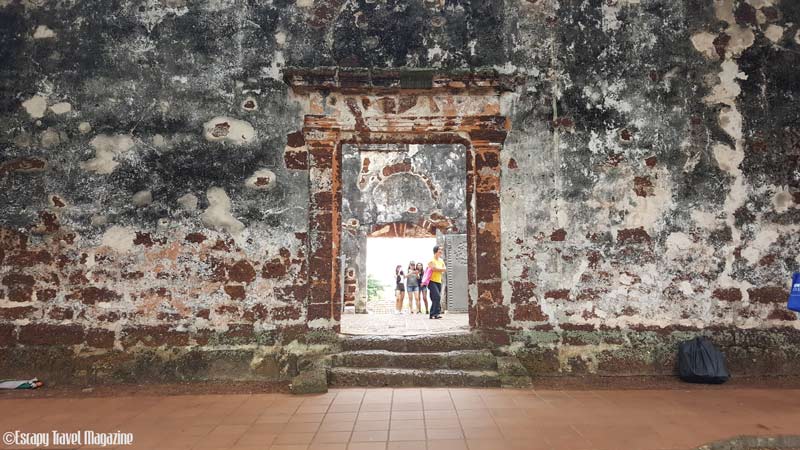
The interior of St. Paul’s Church on St. Paul’s Hill in Malacca.
Wait… Is It Really St. Paul’s Church?
Here is where things become wonderfully complicated. Tourism brochures often compress two centuries into two cheerful paragraphs. The reality is considerably messier. The original chapel changed names, functions, and even denominations several times.
The Jesuits took over in 1548. They enlarged the building. A bell tower was added. Missionaries came and went, and among them was one of Christianity’s greatest travellers, St. Francis Xavier, whose body rested temporarily inside the church after his death before continuing its final journey to Goa.
When the Dutch conquered Melaka in 1641, they transformed the Catholic church into a Dutch Reformed church. Only then did it become known as St. Paul’s Church, or Bovenkerk, literally the “High Church.”
The building most tourists admire today is therefore not purely Portuguese. It is Portuguese, Jesuit, Dutch, British, and now Malaysian. Every empire left fingerprints.
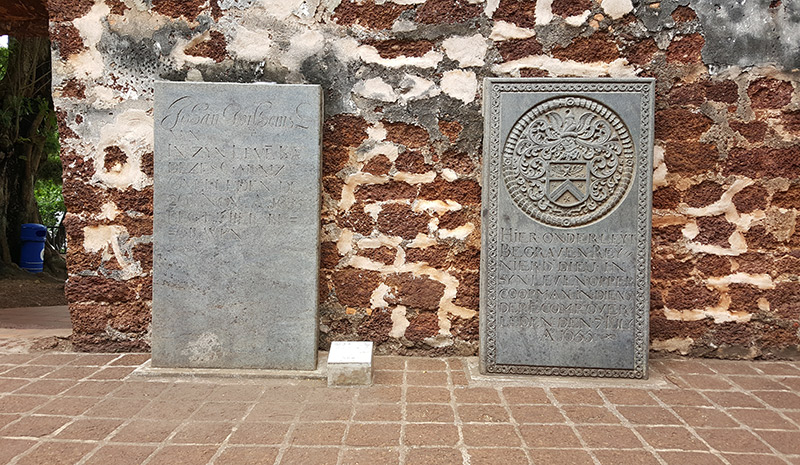
Gravestones that rests on the walls of St. Paul’s Church.
Then Came The British…
And here is the plot twist, the British. They did not preserve the church because they loved history. After taking control of Melaka following the Anglo-Dutch Treaty, the abandoned church became something far less holy. A gunpowder magazine, or a place where gunpowder was stored. Imagine centuries of prayers being replaced with barrels of explosives. Seems like history has a peculiar sense of humour.
Then, what about the missing roof? Much of what visitors see today reflects centuries of neglect, military reuse, and weathering rather than a carefully preserved monument. The ruins are authentic precisely because they were not lovingly maintained.
The Church That Refuses To Tell Just One Story
Walk inside, and ignore the tourists. Also ignore the pigeons conducting what appears to be an annual conference. Look instead at the walls. Those stone tablets are not decoration. Many are old tombstones removed from cemeteries around the hill and placed against the walls during conservation efforts.
Next, read the names and writings on these stones. They are Portuguese, Dutch, military officers, merchants, officials, families, and there’s Latin inscriptions as well. Each stone is a frozen conversation from centuries ago. History here is not standing politely behind glass. It is literally leaning against the wall.
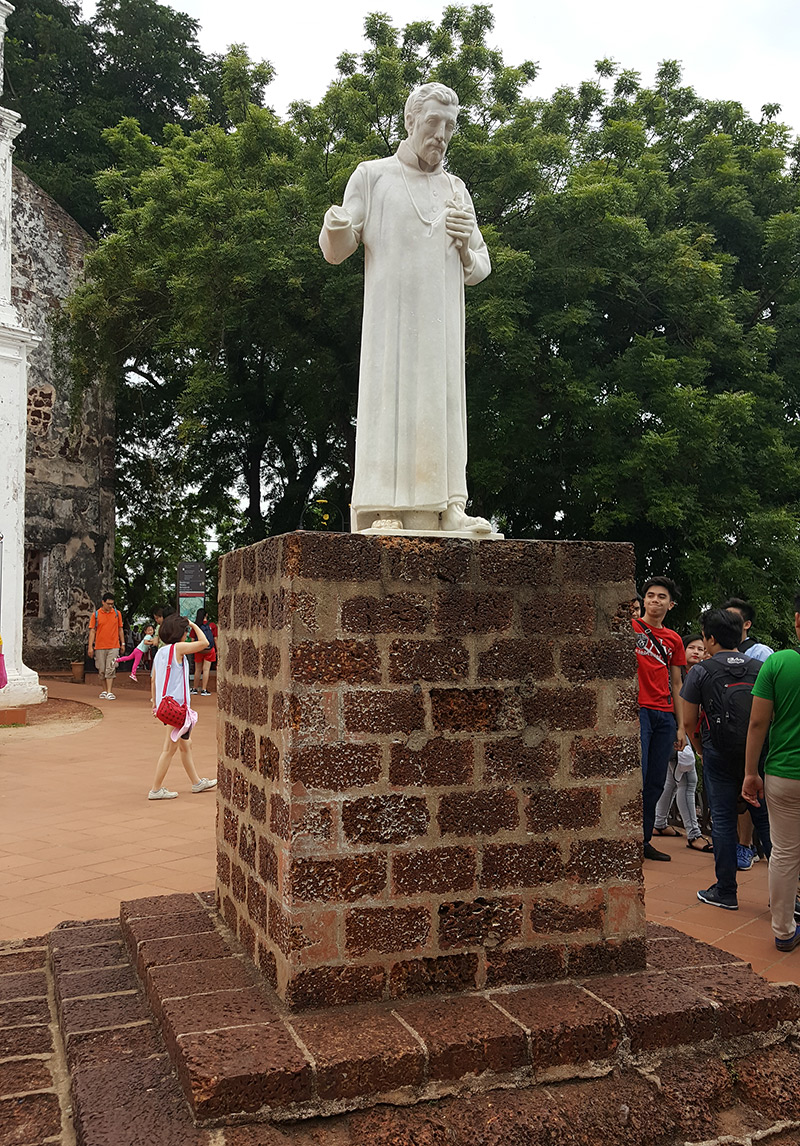
A statue of St Paul without a hand.
The Statue With A Missing Arm
Every tourist photographs the white statue of St. Francis Xavier. Few notice something missing… His right arm. Legend often explains this dramatically. I was personally told by a guide during one of my earlier visits, many years ago, that there was once a terrible storm that broke a large branch off a nearby tree. It fell and broke the arm off the statue of St. Francis Xavier. Dramatic indeed.
The historical explanation is rather more interesting. The arm was intentionally removed because, after the saint’s death, his right forearm had been detached centuries earlier as a revered relic for Rome. The modern statue we see here was later altered to reflect that historical reality.
Sometimes history sounds unbelievable not because it actually happened, because what happened is not as dramatic, and tells a far more boring story.
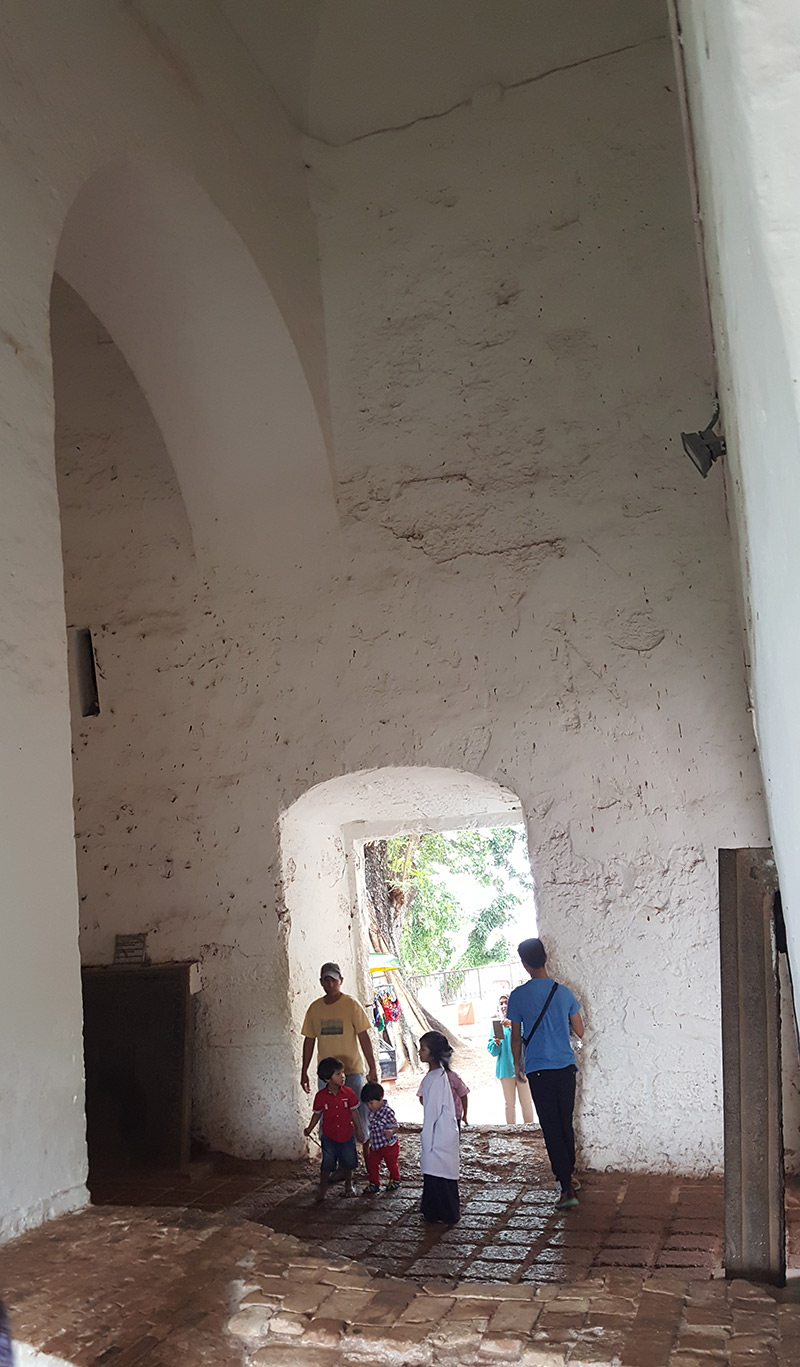
The inside of St Paul’s Church that still has a ceiling, very tall ceiling.
The Questions Nobody Seems To Ask
Now let us become detectives. Many official tourism descriptions confidently repeat familiar statements. Oldest church in Malaysia built in 1521. Temporary resting place of St. Francis Xavier. A Portuguese built relic. Dutch, British, etc. came and did things to it. All are true. But they are only the headlines.
What happened to the local Malay community living around the hill before the Portuguese arrived?
What archaeological evidence still lies beneath the church floor?
How much of today’s structure belongs to Duarte Coelho’s original chapel, and how much belongs to later Jesuit rebuilding?
Which surviving stones are in their original positions?
Which were relocated during twentieth century conservation?
Why do different publications occasionally disagree over dates, names and architectural phases?
Researchers, including independent Melaka historian Serge Jardin, have repeatedly encouraged readers to examine original records rather than relying solely on simplified tourist narratives. His work highlights how many popular stories become repeated so often that they begin to sound like unquestionable fact, even when the historical evidence is more nuanced. I agree.
History deserves better than copy-and-paste. It deserves better and deeper questions, and there are many.
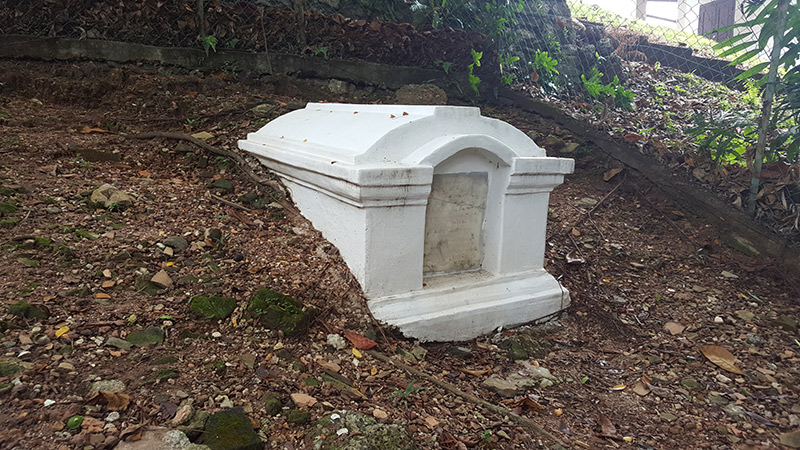
One of the few Dutch graves along the hill.
Additional Information
St Paul’s Church Melaka
Address: 1935, Jln Kota, Banda Hilir, 75000 Melaka, Malaysia.
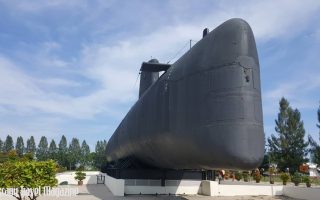
Malacca used to be a very important maritime hub and thus maritime museums are a must visit. The Submarine Museum in Malacca gives one the opportunity to see what the inside of an old submarine looks and feels like.
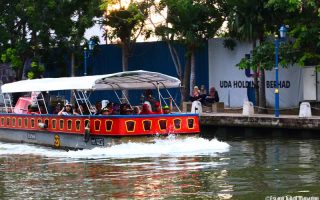
A cruise on the Melaka River is a relaxing experience. Melaka River snakes through a part of Malacca’s historical city making it a relaxing way to enjoy the sights.
Directed by Wang Chaoge, the more well known for the opening ceremony of the 2008 Olympic Games in Beijing (co-director); Encore Melaka tells a story about Malacca and its history as well as a story of its people.