Step inside the Stadhuys and you’ll find yourself in a building that doesn’t just whisper history, it practically shouts it with a grin.
The Historical and Ethnography Museum is like a time machine that forgot to install seatbelts. One moment you’re strolling past the Malay Sultanate, the next you’re ducking Portuguese cannons, then suddenly you’re sipping tea with the Dutch, before the British march in with their stiff upper lips, and finally the Japanese arrive with their own brand of order.
Each era has its own corner, its own treasures, its own quirks. Weapons, cabinets, statues, even machinery that looks like it was designed by someone who thought “complicated” was a compliment.
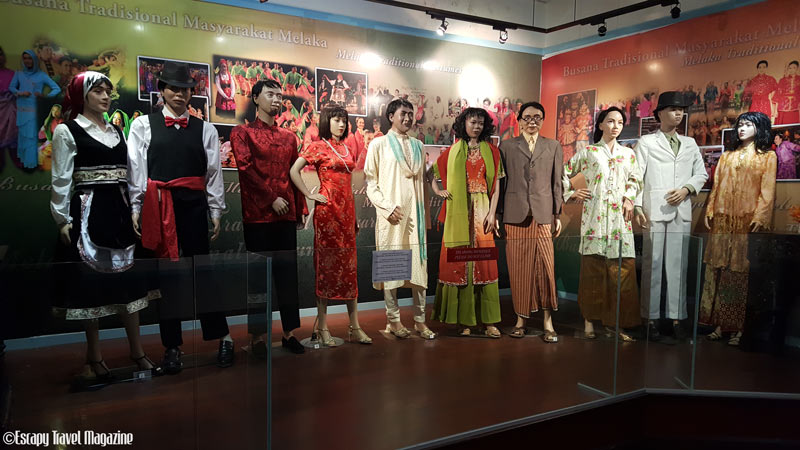
Then comes the part that makes you smile. The Ethnography section isn’t about kings or generals, it’s about people. Malays, Chinese, Indians, Baba and Nyonya, Portuguese, Chetti, Chitty, etc. Each community with its own rhythm, its own flavour, its own way of dressing that says “this is who we are.” Not the everyday clothes, but the ones that make you stop and think, “Wow, that’s style with a story.”
You wander past recreated homes, shops, and hangouts, and suddenly you’re not just looking at history, you’re living it. You can almost hear the chatter in the markets, smell the spices, feel the coins and stamps that once passed from hand to hand.
A showcase of some of the clothing styles worn by the people of Malacca.
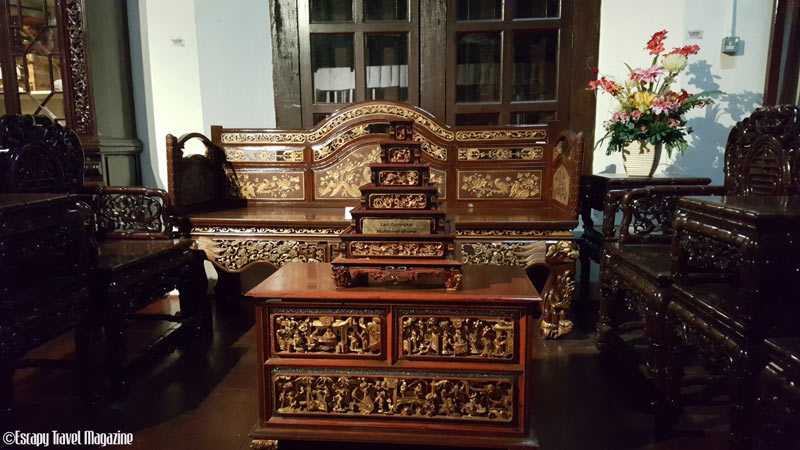
Furniture found in the homes of the Baba and Nyonya.
It’s dramatic, yes, but also funny in its own way. Imagine trying to explain to someone from five hundred years ago why we now pay with plastic cards instead of silver coins, or why we take selfies instead of commissioning portraits. The museum makes you curious, makes you laugh, makes you wonder.
Historical and Ethnography Museum is not just a collection of objects. It’s a reminder that Melaka was never just one story. It was many stories, layered like a cake baked by history itself. And if you listen closely, you’ll realize those stories are still alive, waiting for you to ask one more question, to look just a little closer.
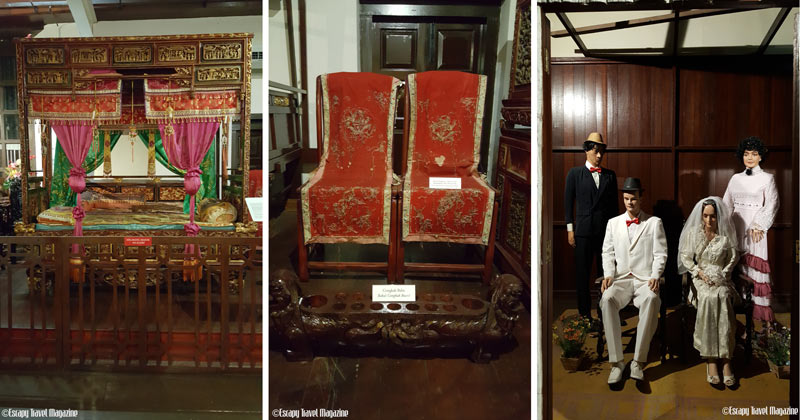
Left: The bridal bed of the Baba and Nyonya. Middle: The bridal chairs of the Baba and Nyonya. Right: a diorama of a Portuguese wedding.
Additional Information
The Historical and Ethnography Museum is located in the Stadhuys. To visit the Historical and Ethnography Museum visitors will have to purchase a ticket at a small fee. The ticket covers 5 museums and a gallery that are located at the Stadhuys.
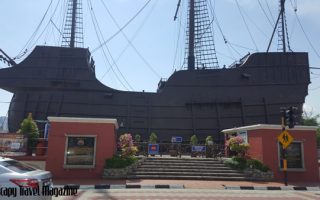
Malacca used to be a very important maritime hub and thus maritime museums are a must visit. The Submarine Museum in Malacca gives one the opportunity to see what the inside of an old submarine looks and feels like.
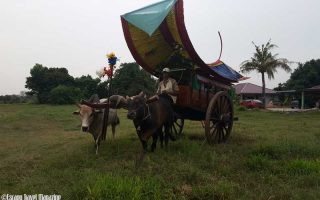
One of the dying attractions in Malacca is the bullock cart ride. They are being overtaken by other rides such as the trishaws with their fancy lighting and decor. But you can still experience this unique and traditional form of transportation if you know where to find them.
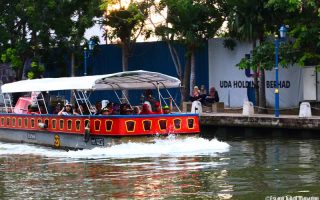
A cruise on the Melaka River is a relaxing experience. Melaka River snakes through a part of Malacca’s historical city making it a relaxing way to enjoy the sights.
Directed by Wang Chaoge, the more well known for the opening ceremony of the 2008 Olympic Games in Beijing (co-director); Encore Melaka tells a story about Malacca and its history as well as a story of its people.