Where History Floats Past and Fish Ignore Traffic Rules
By Philemon Foo
Every great city has a river. London has the Thames. Paris has the Seine. Melaka has a river that quietly whispers, “Hold my coconut. I’ve seen things.”
The Melaka River is far more than a stretch of water winding through a UNESCO World Heritage city. This is where the story of Melaka began, and what a spectacularly odd beginning it was.
Picture the scene… A Sumatran prince named Parameswara is taking a break beneath a Melaka tree while out hunting. His hunting dog decides to chase what must have looked like an easy lunch, a tiny mouse deer. Big mistake… The mouse deer had clearly skipped the chapter on knowing its place. Instead of fleeing, it fought back, sending the prince’s dog tumbling into the river. Imagine explaining that to the other dogs.
Parameswara watched the whole performance and saw it as a good omen. If something small could defeat something much larger, perhaps this was exactly the place where a great kingdom should rise. Looking up at the Melaka tree shading him, he named the settlement after it. Just like that, one feisty little mouse deer accidentally helped put Melaka on the map. Not bad for an animal barely taller than your knees.
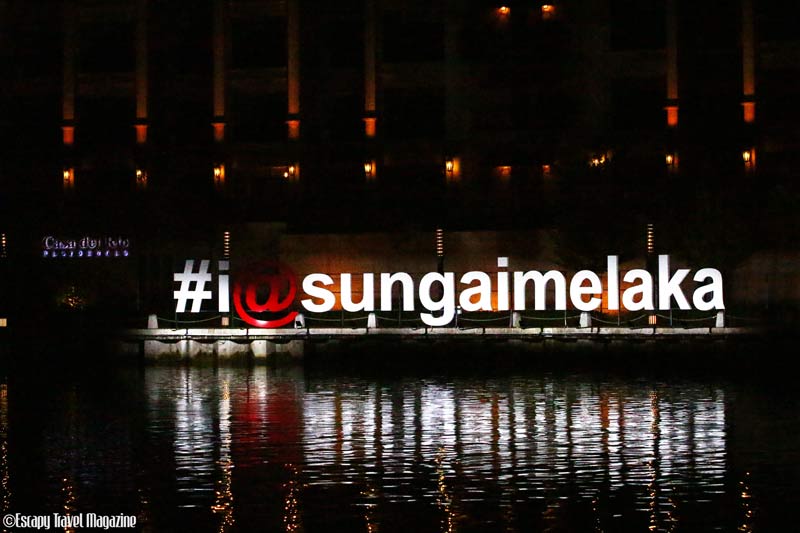
A night shot of the “#I’m at Malacca (Melaka) River signage.
From those humble beginnings, Melaka grew into one of the world’s greatest trading ports during the fifteenth century. Ships from China, India, Java, Arabia, and beyond crowded the river, carrying silk, spices, porcelain, precious metals, and enough exotic goods to make every merchant grin from ear to ear.
The river became the city’s lifeline. It also became a witness to wars, conquests, celebrations, and centuries of history. If rivers kept diaries, this one would need several libraries.
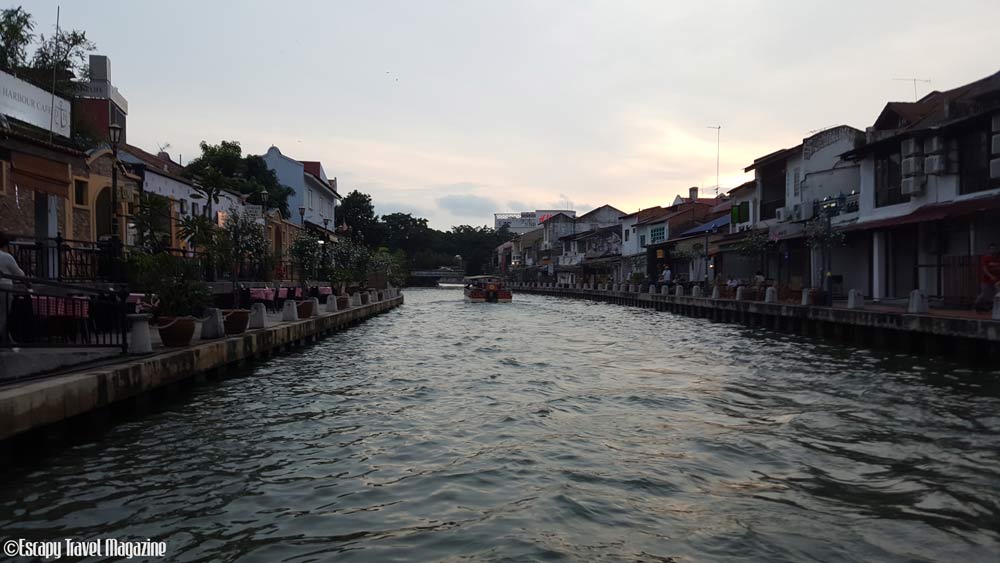
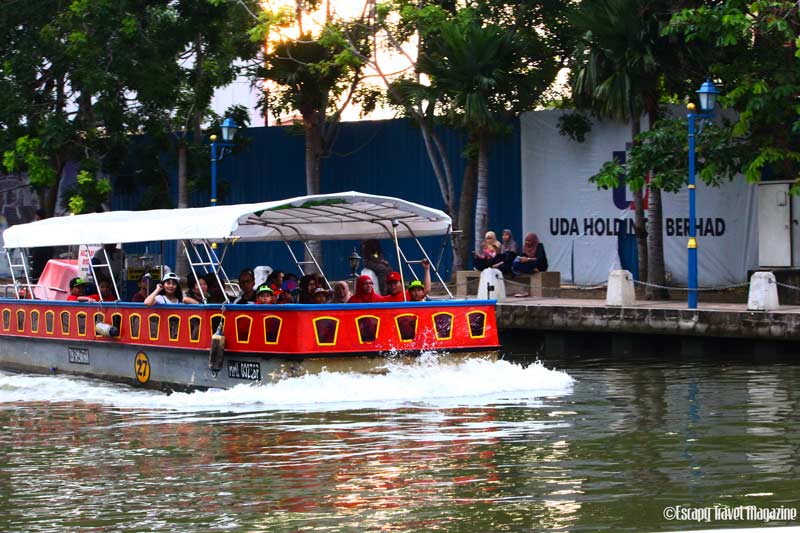
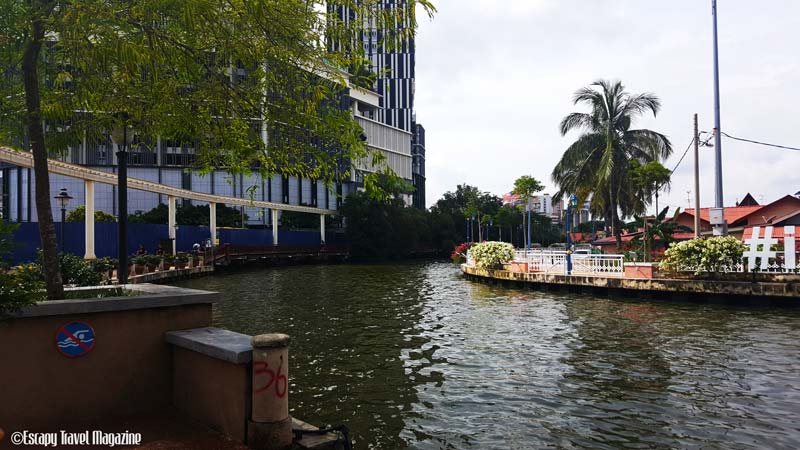
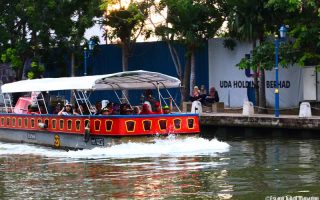
Today, however, the Melaka River has swapped cannon fire for camera shutters. A cruise along the river is one of the best ways to experience the city. From the water, Melaka reveals a completely different personality. Historic shophouses stand shoulder to shoulder with modern buildings. Colourful murals cover walls like giant outdoor art galleries, celebrating the cultures and traditions that have shaped this remarkable city.
Cruising through the historical city of Malacca.
Around every bend is another surprise. One moment you are admiring beautifully restored heritage buildings. The next, someone has painted an enormous artwork on a wall that practically begs to become your next social media profile picture. It is difficult to imagine that this picturesque river was once in terrible condition.
Many years ago, rubbish floated where boats now glide. Many riverside buildings had fallen into disrepair, and the area had lost much of its charm. Then came one of Melaka’s greatest success stories.
The state government embarked on an ambitious restoration project, cleaning the river, refurbishing the waterfront and breathing new life into the historic surroundings. The transformation has been extraordinary. What was once overlooked has become one of the city’s biggest attractions.
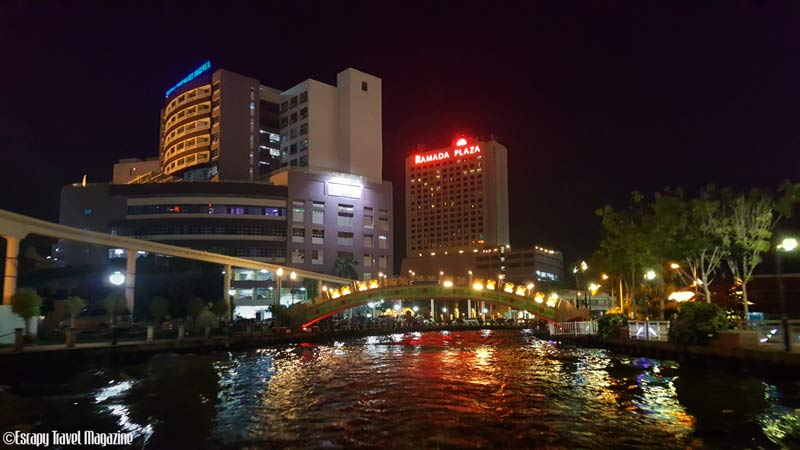
Night shot of some of the buildings along the Malacca River.
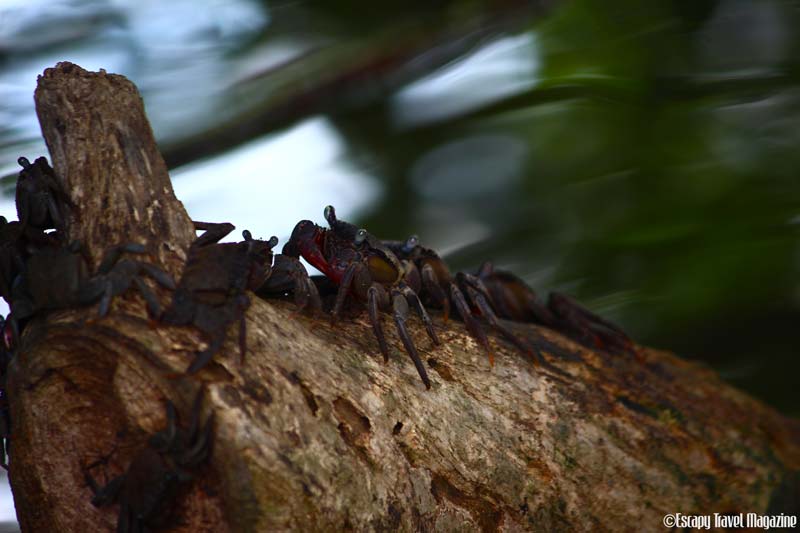
Even nature has noticed… Walk along the riverbanks and you will spot fish darting beneath the surface, often chasing smaller prey with the enthusiasm of children running towards an ice cream truck. Near the mangrove areas, armies of mangrove crabs gather along the muddy banks. Perhaps they are sunbathing. Perhaps they are holding important crab meetings. No one has managed to interview them yet. The return of wildlife is one of the clearest signs that the river has recovered remarkably well.
Tree climbing crabs on a fallen tree stump by the banks of Malacca River.
History lovers will discover plenty to explore beyond the water itself. The Ruins of St. Lawrence’s Chapel, originally built by the Portuguese in the eighteenth century, offer a glimpse into Melaka’s colonial past.
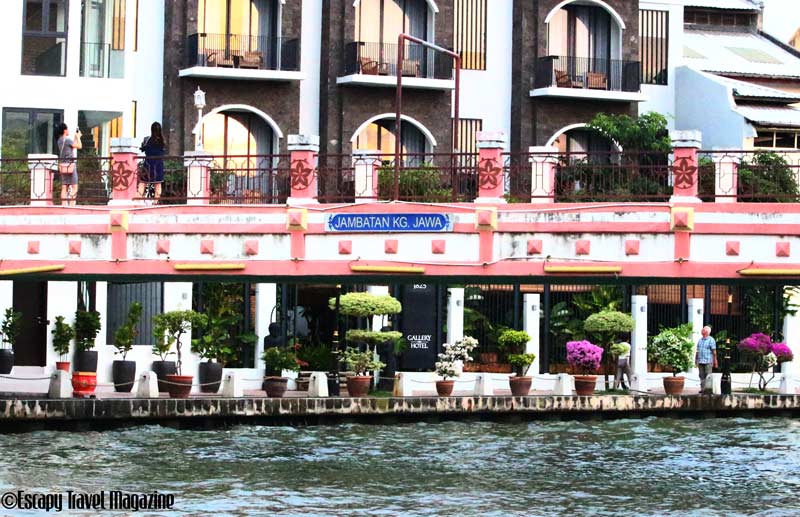
Then there is the Kampung Jawa Bridge, better known as the Ghost Bridge. The nickname is not the result of spooky marketing. During the Japanese Occupation in the Second World War, the bridge became the site where many locals, particularly Chinese businessmen, were executed by the feared Kempeitai military police.
It serves as a solemn reminder that beneath Melaka’s colourful streets lies a history filled with both triumph and tragedy.
The Kampung Jawa Bridge, also known as Ghost Bridge.
Fortunately, the mood soon becomes lighter. The riverside today is lined with cafés and restaurants that make it dangerously easy to forget your schedule. Many occupy beautifully restored heritage buildings, while others blend modern architecture with the historic surroundings. Together they create a delightful mix where old and new sit comfortably side by side.
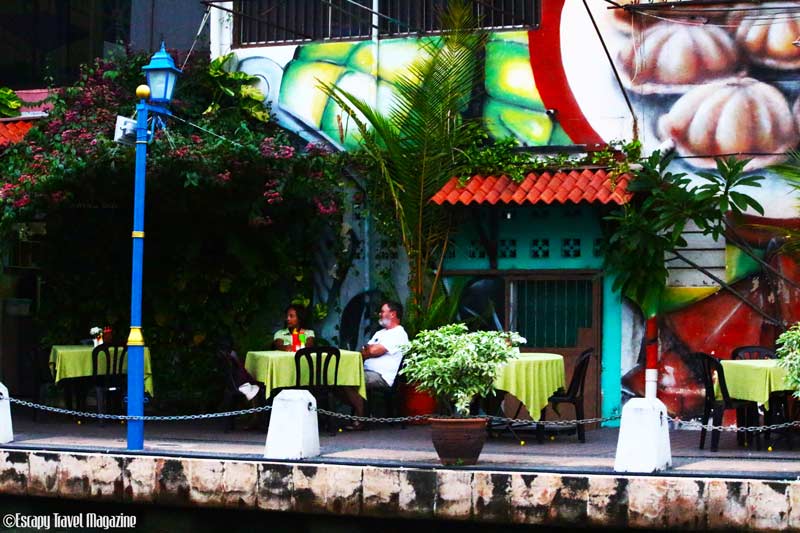
Order a meal, sip a coffee, and watch boats drift past. Don’t just watch. Wave enthusiastically at complete strangers on the river cruise. Some may even wave back.
Al fresco dining by the Malacca River.
Things To Do By The Melaka River
Melaka River Cruise
Speaking of the Melaka River Cruise, this is an experience that deserves a place on every visitor’s itinerary.
Unlike travelling by car, the cruise reveals hidden corners of the city that can only be appreciated from the water. As the boat glides along, commentary introduces the landmarks, bridges and historic sites that have shaped Melaka over the centuries. It is sightseeing with a gentle breeze thrown in for free.
By a section of the river lies Kampung Morten (Morten Village), often described as a living museum. Traditional wooden Malay houses still stand proudly here, many dating back generations. Families continue to live in these beautifully preserved homes, keeping old traditions alive in a rapidly changing world.
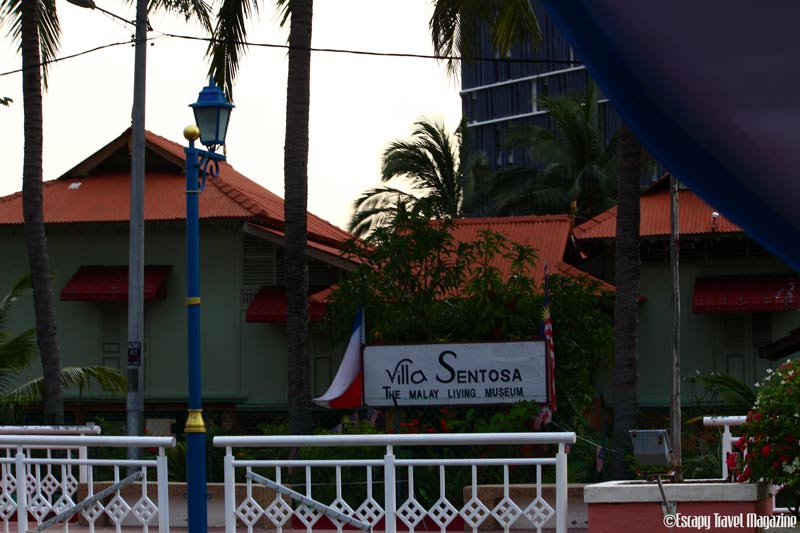
Do not miss Villa Sentosa, the historic home of the village’s founder. Walking through it feels less like entering a museum and more like stepping into a family story that has been lovingly preserved.
If your adventure calls for something a little different, make your way to The Shore Shopping Gallery. Yes, there are shops. But the real treasures are found above and within.
Explore the oceanarium, where marine creatures glide silently through tanks, then head to the rooftop observation deck for spectacular panoramic views across Melaka. It is the perfect place to appreciate just how the river continues to shape the city it created centuries ago.
The Shore by the banks of the Malacca River.
Google Maps to Shore Shopping Gallery.
The Melaka River is more than water flowing towards the sea. It is where a brave little mouse deer changed history. It is where merchants built fortunes. It is where empires fought for control. It is where a neglected waterway reinvented itself into one of Malaysia’s finest waterfront attractions.
And if you listen carefully while drifting along its gentle current, you might just hear the river chuckling to itself, quietly reminding every passing visitor that none of this would have happened if one determined little mouse deer had simply decided to run away.
Malacca used to be a very important maritime hub and thus maritime museums are a must visit. The Submarine Museum in Malacca gives one the opportunity to see what the inside of an old submarine looks and feels like.
A cruise on the Melaka River is a relaxing experience. Melaka River snakes through a part of Malacca’s historical city making it a relaxing way to enjoy the sights.
Directed by Wang Chaoge, the more well known for the opening ceremony of the 2008 Olympic Games in Beijing (co-director); Encore Melaka tells a story about Malacca and its history as well as a story of its people.