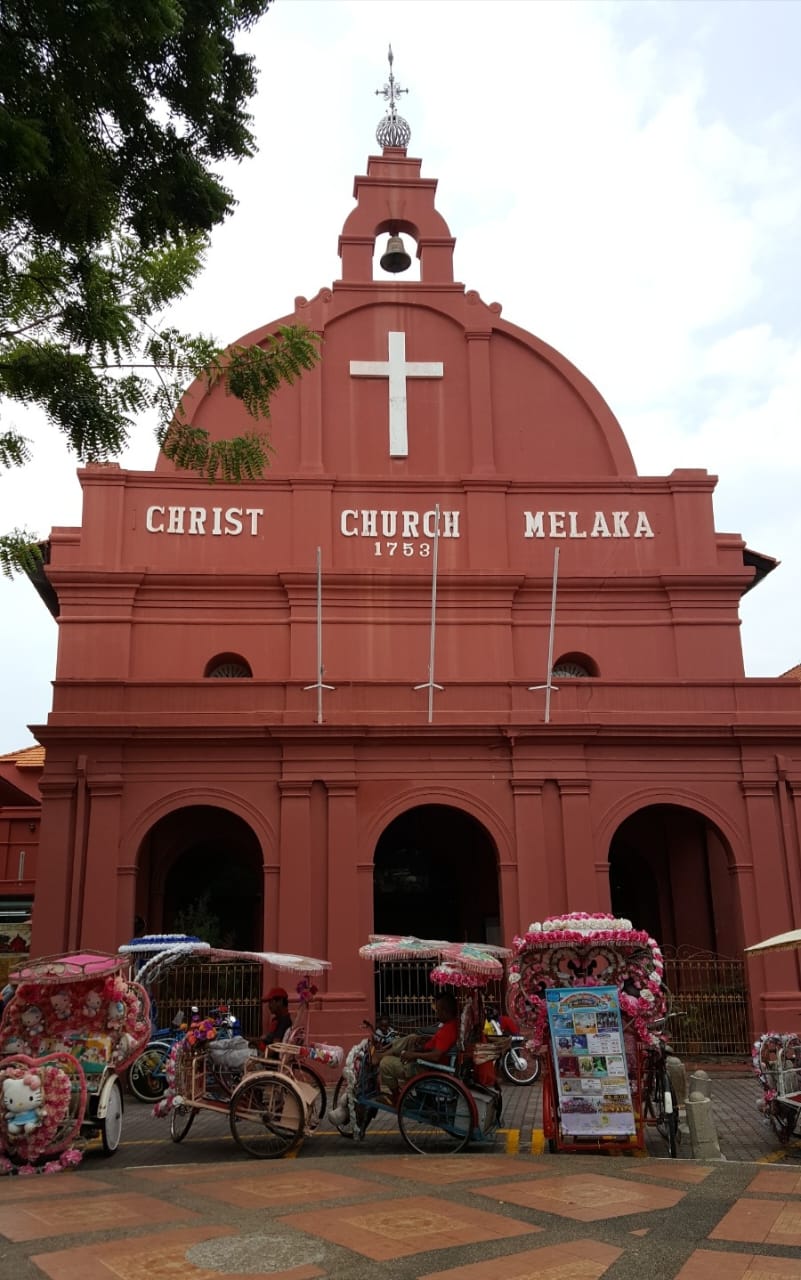
From a distance it looks harmless enough. Bright red walls, white windows, trishaws buzzing around outside with enough speakers to wake half the “Dutch Republic.” Thousands of visitors take photographs, drink coconut shake, nod wisely, and wander off believing they have just “done” Christ Church. Far from it.
Because this church is less like a museum and more like an old wizard who answers every question with another question. The moment you think you understand it, history quietly laughs, and gives you more things to ponder on; especially if you are one who takes history seriously.
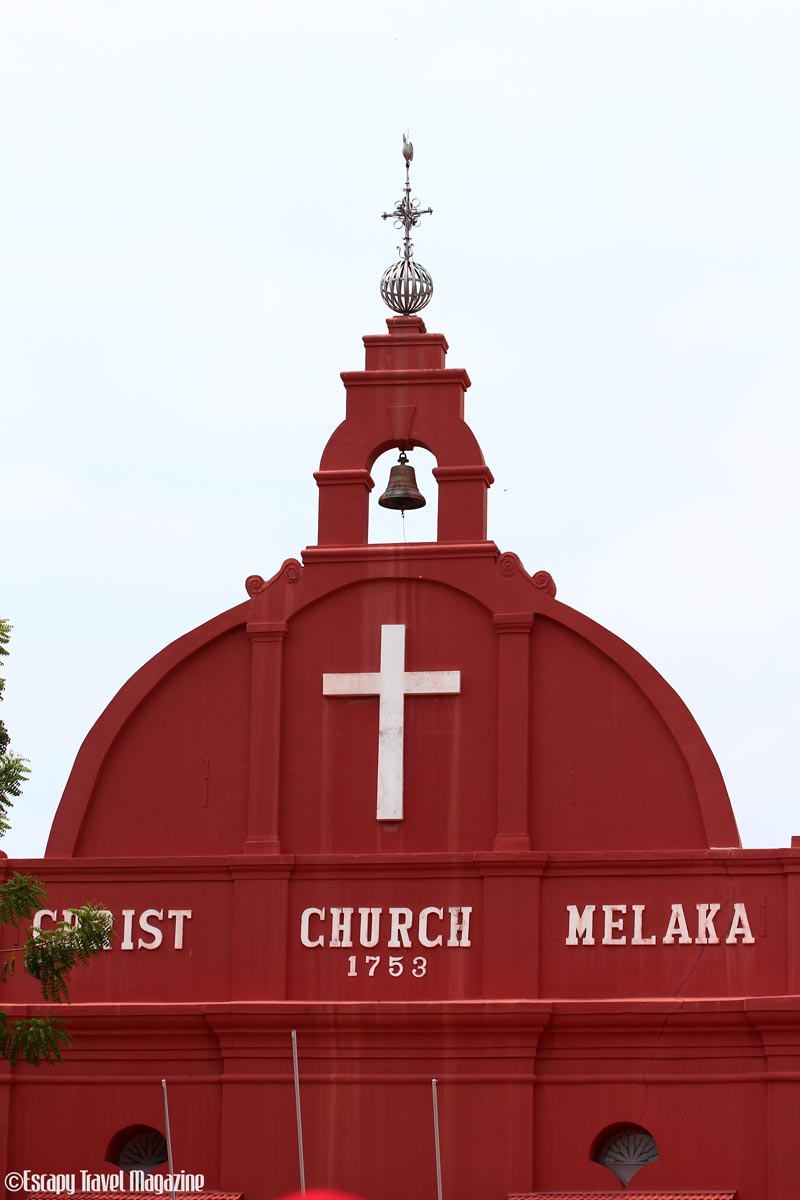
Most guidebooks proudly announce that Christ Church was completed in 1753 to celebrate one hundred years of Dutch rule. That statement is broadly correct. Construction began in 1741, exactly one century after the Dutch and their Johor allies captured Melaka from the Portuguese in 1641. Twelve years later the church was completed and became the principal Dutch Reformed church in the city. Today it remains Malaysia’s oldest continuously functioning Protestant church.
Simple… or is it? We know history has this naughty habit of hiding the interesting bits underneath the comfortable ones. For starters, this was never simply a church built because someone fancied a new place to worship. When the Dutch first conquered Melaka, they did not immediately build Christ Church.
Instead, they climbed St Paul’s Hill, and took over the old Portuguese Church of Our Lady of the Annunciation, transforming it into the Dutch Reformed Bovenkerk, or Upper Church. For roughly a century that church served the Dutch community here on this land. This leaves me with a few questions…
The bell at the steeple of Christ Church Melaka, built in 1753.
So why did they build an entirely new one? Was the old church beyond repair? Was climbing the hill becoming inconvenient and a chore? Did the expanding Dutch population require a larger place of worship?
Or… and this is a big or… was constructing a magnificent church beside the Stadthuys a political statement declaring that Dutch rule was no temporary occupation but a permanent civilisation?
That is where things become fascinating. Independent researchers encourage visitors to look beyond simplified tourism narratives, and ask what the surviving documents actually tell us. Sometimes the official story is correct, sometimes they are incomplete, and sometimes they quietly ignore questions nobody thought to ask. And that is how history should be explored. Not simply accepted, but with more investigation.
So, what’s with the red walls? The were painted red for easier, more manageable maintenance… so it has been said.
Walk around the church and notice something curious, the famous red walls. Everyone who visits, photographs them. Almost nobody asks whether they were always red, or why the Dutch painted them red, or even if the Dutch did paint them red. Well, they did not.
The colour red has become one of Melaka’s greatest icons only appeared after British alterations in the early twentieth century, around 1911. Earlier depictions show a much lighter appearance; white. In other words, one of the most photographed “Dutch” landmarks in Asia owes much of its present look to the British. History has a wicked sense of humour. The building people proudly call the Dutch Church wears British make up.
Then step inside and the atmosphere changes immediately. Outside, trishaw music competes with traffic, while people try to communicate with one and other. Inside, silence settles over everything like an old cloak. The peace, tranquillity, and calmness of an old church that has seen wars, and battles.
The massive timber beams above your head are extraordinary. Some were cut from single tree trunks, and have supported the roof for nearly three centuries. Imagine the forests that once existed. Imagine the craftsmen who shaped them using nothing resembling modern machinery. Yes, no power tools, no laser levels, and no electric drills or electric saws. Just skill, sweat, mathematics and patience. One small mistake and hundreds of tonnes of timber and masonry become tomorrow’s newspaper headline. Well, if newspapers had existed in Melaka back then.
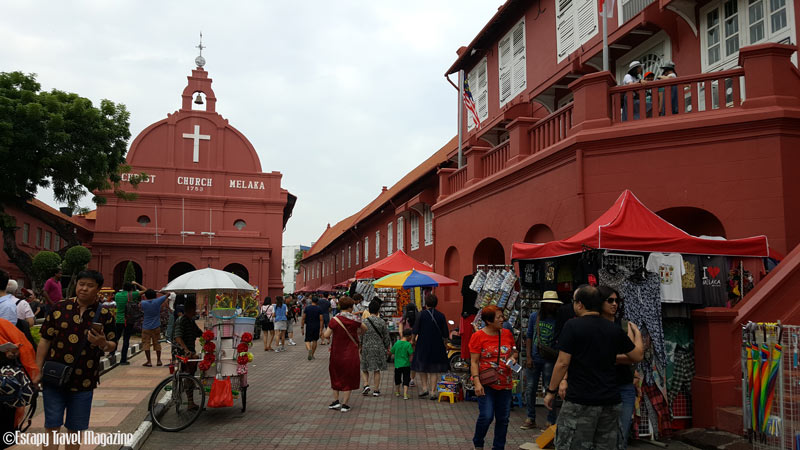
Very busy outside the church. Lots of tourists and locals walking about.
The church also witnessed one of history’s great political plot twists. In 1824 the Anglo Dutch Treaty changed everything. Not because the building moved somewhere else, but because the rulers did. Melaka was handed over to the British. The congregation changed from Dutch Reformed to Anglican.
The church itself was renamed Christ Church, and reconsecrated in 1838. Same building. Different empire. With this change came different language, and different traditions. Imagine waking up one morning to discover your house belonged to another country. The people around you speak in a language you do not understand. They also dress differently.
History can be astonishingly efficient. Yet perhaps the biggest mystery is not the architecture. It is our memory. Ask the average visitor this question, who built Christ Church? “Dutch.” Yes, correct. Ask, who first worshipped on St Paul’s Hill? “Portuguese.” Yes, Correct.
Then ask, how did the rulers, Portuguese soldiers, Dutch merchants, British administrators, Chinese traders, Indian craftsmen, Eurasians, enslaved people, local labourers, and countless unnamed families all shaped this part of Melaka? Silence. That silence is where real history begins.
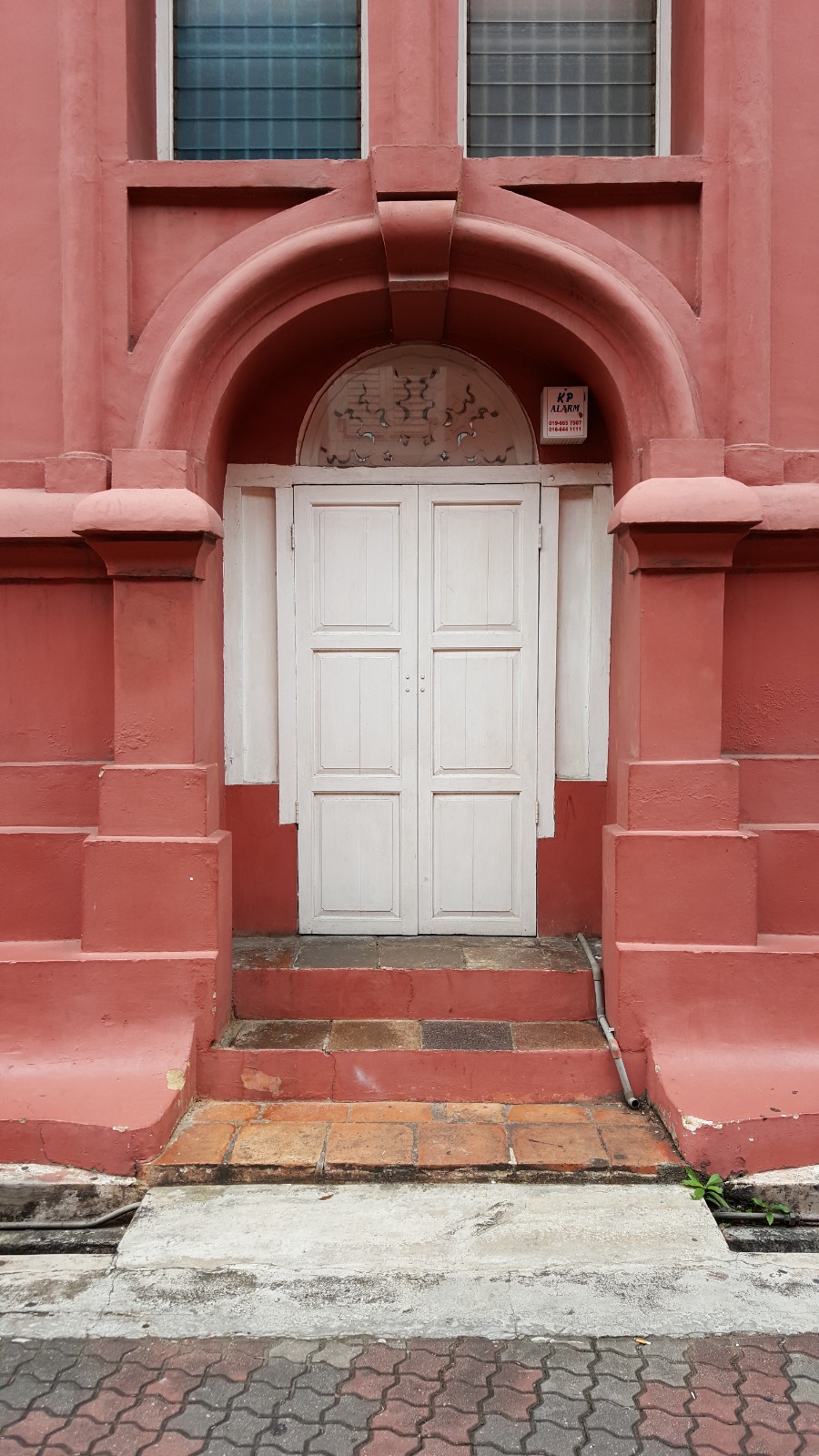
I was walking about the church building and these doors caught my eye. Not just the doors, but the entire structure. Does it not remind you of Android’s robot logo?
Buildings are easy to preserve while complex stories are much harder. This is why every visitor should treat Christ Church as a starting point rather than a conclusion.
Read Dutch records, Portuguese chronicles, British administrative reports, local Malay sources, and modern researchers willing to question old assumptions. Then compare them to see where they agree, and disagree. Suddenly curiosity begins to take root. Because history is not a souvenir. It is an investigation.
So the next time you stand in Dutch Square, resist the temptation to simply just snap a few quick photographs, and hurrying away. Pay attention to details. Look at the church, and I mean really look. Ask why it stands exactly where it does. Ask why it replaced St Paul’s Church. Ask why its famous colour is not originally Dutch. Ask what vanished buildings once surrounded it. Ask whose stories were preserved, and whose stories quietly disappeared.
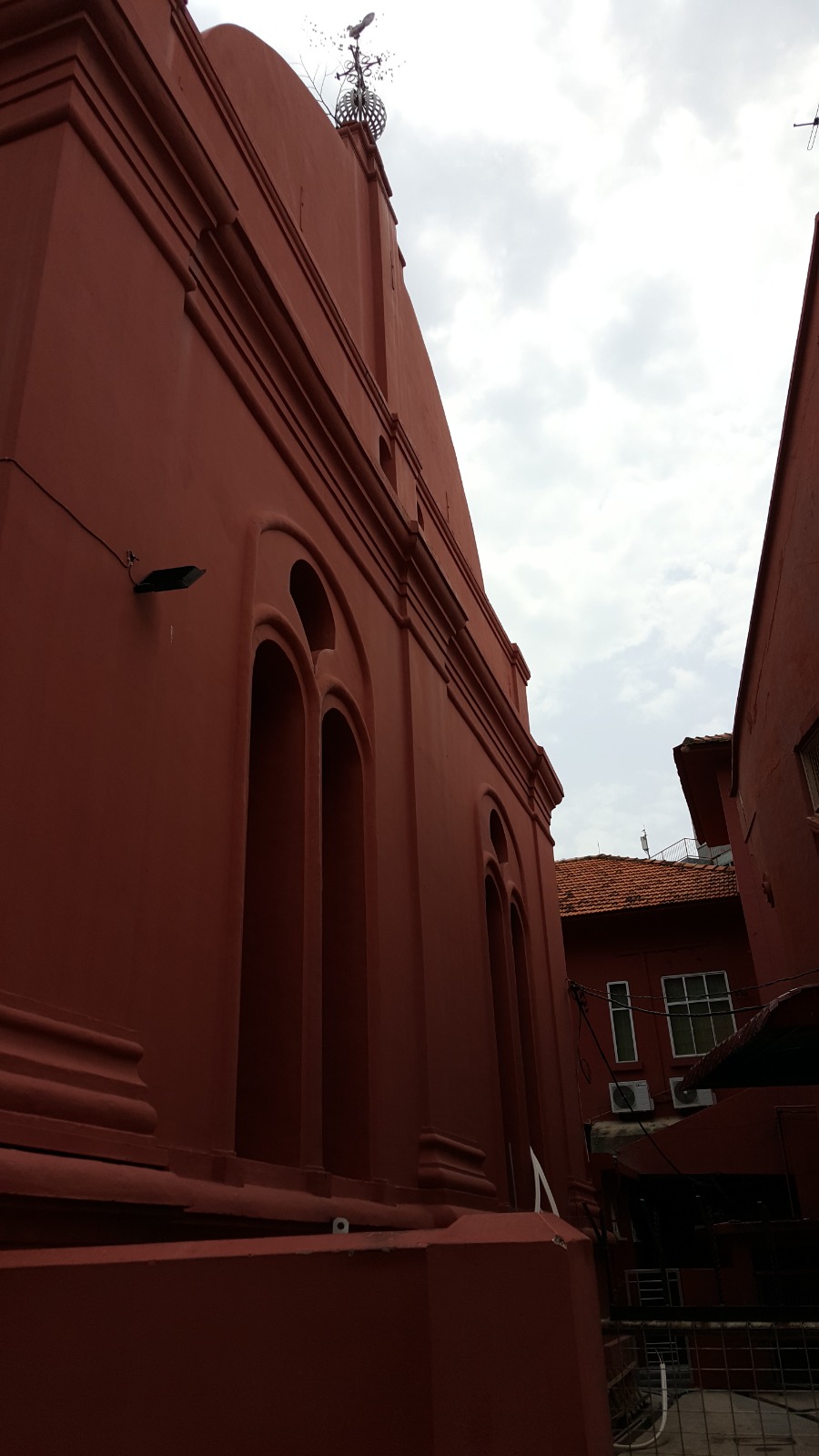
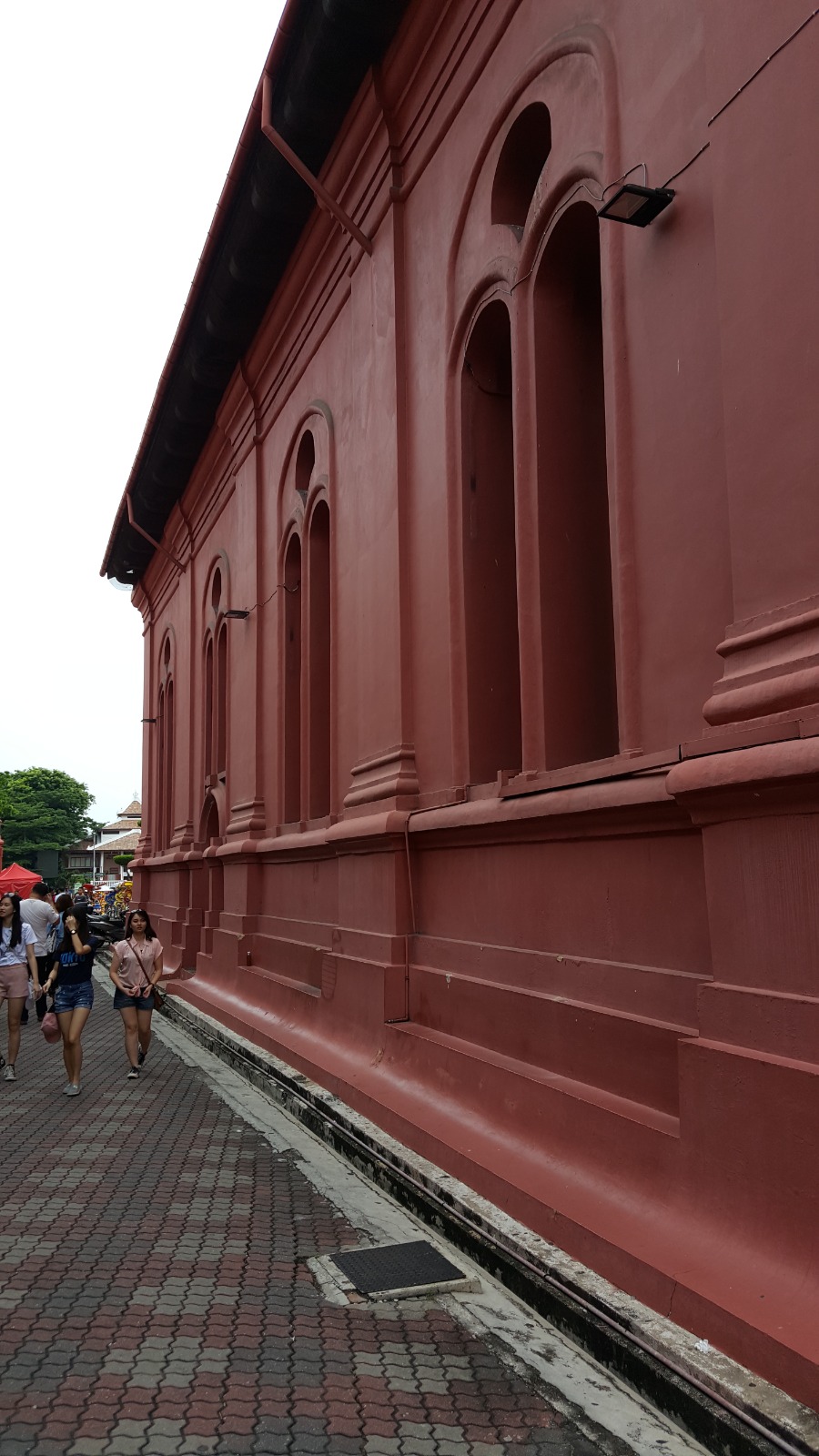
Beautiful arches along its walls. Comparing them to the people walking along the street, you can see just how large they are.
You may arrive expecting to visit one of Malaysia’s oldest churches. You may leave realising you have only just stepped through the first page of one of Southeast Asia’s greatest historical mysteries. And somewhere, beneath those ancient beams, the old church will probably smile not because it has answered your questions. But because it has just given you twenty more.
Additional Information
Christ Church Melaka
Address: Gereja Christ, Jalan Gereja, Banda Hilir, 75000, Melaka, Malaysia.