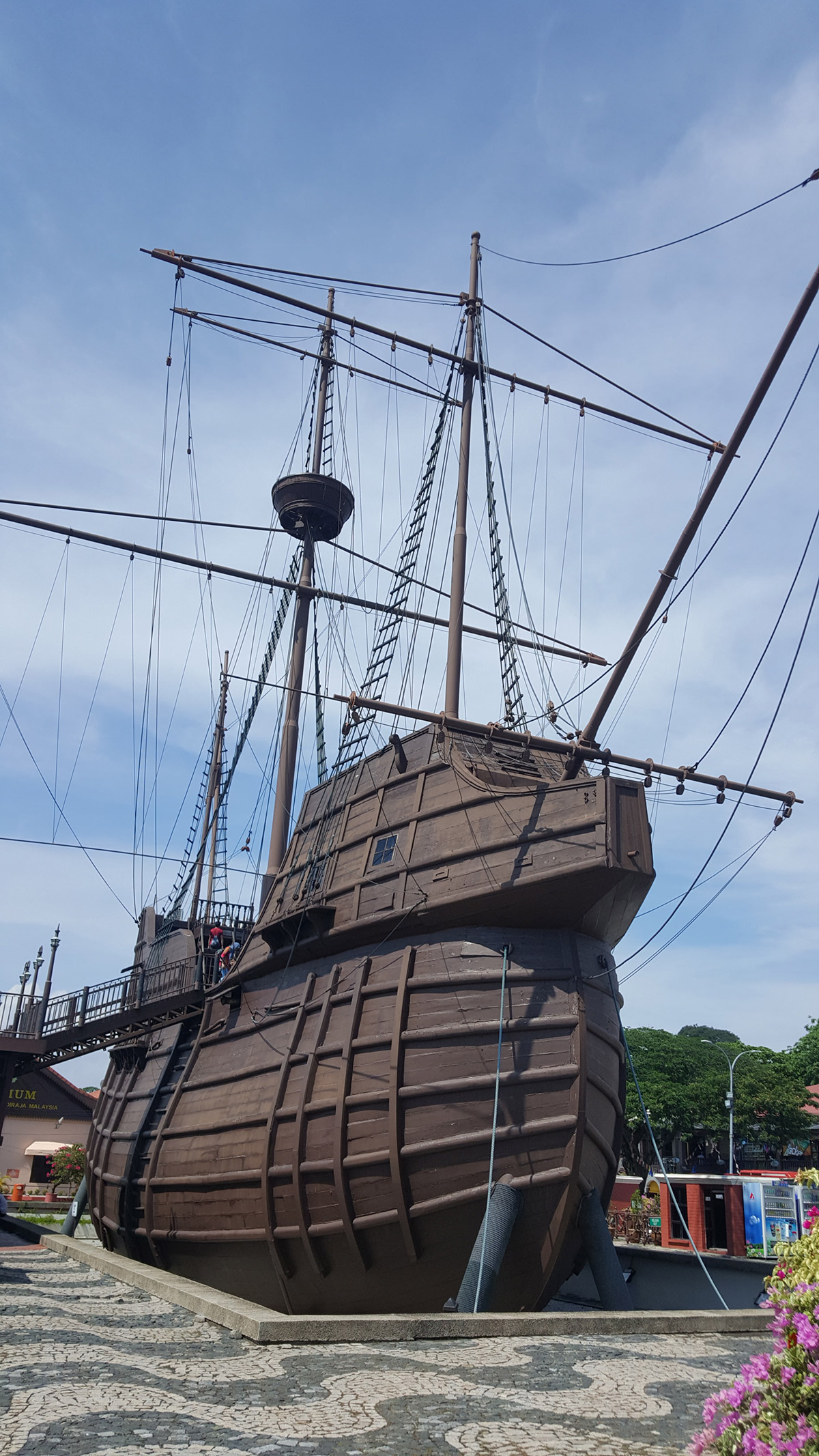
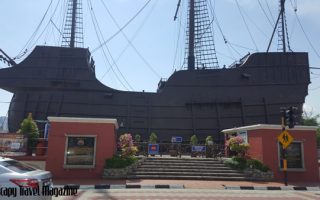
Some museums greet you with a polite little sign. The Maritime Museum of Melaka greets you with an enormous Portuguese ship called a Carrack, that appears to have sailed straight out of the 16th century, parked itself beside the Melaka River, and decided it was never leaving. Now that is how you make a grand entrance.
Melaka has never been an ordinary town. Long before skyscrapers and traffic jams, this little strip of land controlled one of the busiest sea lanes on Earth. Traders from China, India, Arabia, Japan, and Europe all squeezed through the Strait of Melaka, turning the city into what historians often called the Emporium of the East.
Wealth poured in by the shiploads. So did spies, diplomats, pirates, adventurers, fortune hunters and armies that preferred introducing themselves with cannons rather than handshakes. Yes, Melaka really was like a magnet attracting everyone who is anyone to come, be it for richness, power, or to rule the routes of the seas. Today, this remarkable history forms part of Melaka’s UNESCO World Heritage status, awarded on 7 July 2008.
If you want to understand why everyone seemed desperate to own this city, there are few better places to begin than the Maritime Museum.
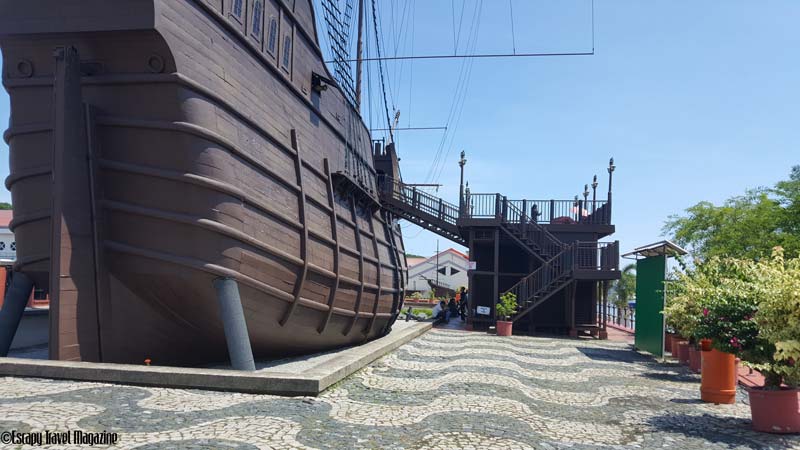
Opened on 13 June 1994 and managed by PERZIM, the museum is impossible to miss. Standing 34 metres high, 36 metres long and 8 metres wide, its centrepiece is a full-scale replica of one of history’s most legendary ships, the mighty Flor de la Mar.
Boarding the Flor De La Mar.
The Ship That Refused To Stay Above Water
The Flor de la Mar, meaning “Flower of the Sea”, was one of the largest Portuguese carracks ever built. Unfortunately, being enormous does not necessarily mean being sensible. Built around 1502, the ship quickly earned a reputation for being difficult to handle. She survived storms, heavy seas, structural problems, and long voyages across the Indian Ocean. It almost feels as though the ship was determined to test everyone’s patience before finally deciding enough was enough.
In 1511, under the command of Afonso de Albuquerque, the Flor de la Mar helped transport Portuguese forces during the conquest of Melaka. After the city fell, the ship was loaded with an astonishing collection of treasures.
Contemporary accounts describe gold, jewels, precious goods and valuable gifts seized from the Sultan’s palace and wealthy merchants. Some historians point out that the treasure aboard has become one of maritime history’s greatest mysteries, inspiring centuries of speculation and treasure hunting. No verified recovery has ever uncovered the legendary cargo in its entirety.
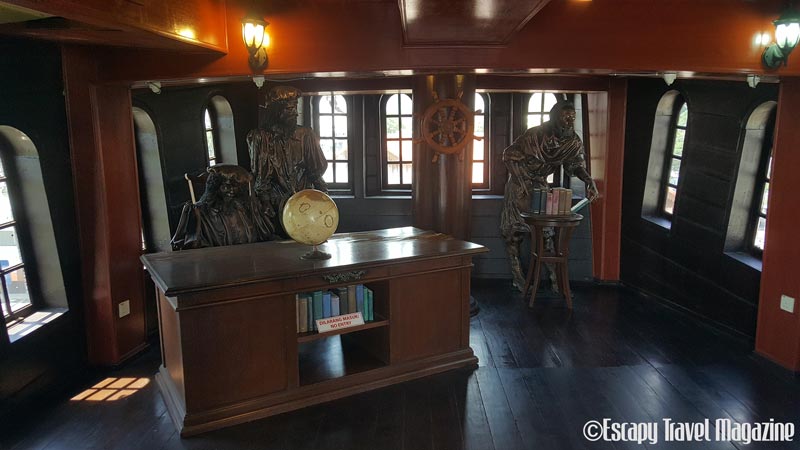
Captain’s quarters on board the Flor De La Mar.
Then came 20 November 1511. While sailing away from Melaka towards Portuguese territories, the overloaded carrack encountered a violent storm near the northern entrance of the Strait of Melaka. She struck a reef, broke apart and disappeared beneath the sea.
Just like that, one of Portugal’s greatest ships became one of the world’s most famous shipwrecks. And somewhere beneath these waters, perhaps still resting quietly under centuries of sand and silt, may lie one of history’s greatest lost fortunes.
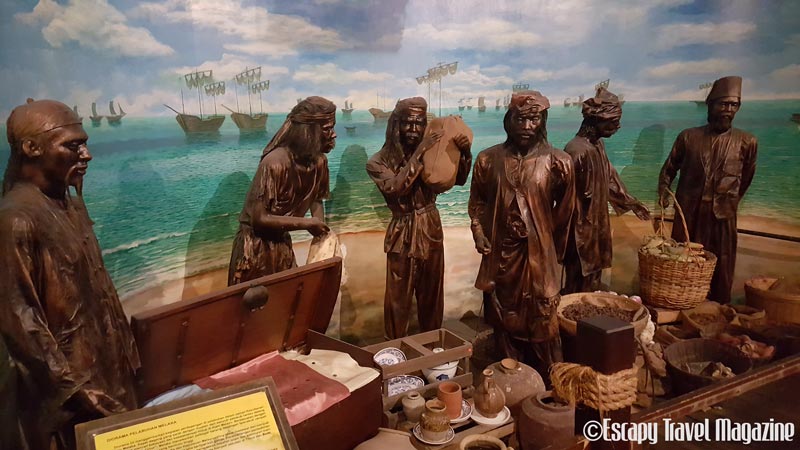
A diorama of Malacca as a seaport back in its hay day.
Climb Aboard History
Thankfully, visiting the museum is considerably safer than sailing on the original ship. Step inside the replica and you quickly realise that life aboard a sixteenth-century vessel was anything but glamorous. Narrow staircases, cramped quarters and low ceilings make modern airline economy class feel positively luxurious.
The galleries take visitors through Melaka’s remarkable maritime journey, beginning with the glorious days of the Melaka Sultanate before exploring Portuguese, Dutch, and the British. Ancient maps, navigational instruments, ship models, maritime artefacts, paintings and trading displays reveal how this city became one of the most valuable ports in the world.
PERZIM also highlights an important lesson throughout the exhibition. When Melaka lost control of its seas, it lost its political power. Maritime dominance shaped the destiny of kingdoms.
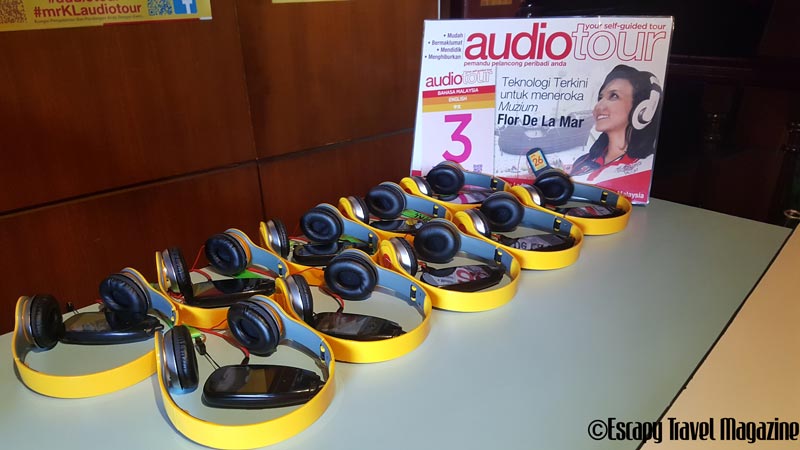
During my visit, audio guides were available for rent. They are highly recommended because the exhibits suddenly begin telling stories rather than simply sitting quietly in display cases. Battles become real. Traders gain personalities. Ships transform from pieces of wood into floating worlds filled with ambition, greed and courage.
Audio devices for rent. They narrate some of the scenes and dioramas in the museum.
Samudera Maritime Museum
The adventure continues at the Samudera Maritime Museum. “Samudera” means ocean, which is rather appropriate because this section dives much deeper into Southeast Asia’s maritime heritage.
Here, visitors discover how the sea shaped Melaka’s economy, politics and culture over hundreds of years. Beautiful scale models showcase famous vessels from different civilisations, while traditional Malay boats remind us that history was not written only by great empires. Local fishermen, sailors, merchants and royal fleets all played their part.
Another fascinating section explores shipwrecks, underwater archaeology and marine discoveries. It serves as a reminder that the seabed is not merely mud and fish. It is also one of the world’s largest history books, with many of its pages still waiting to be read.
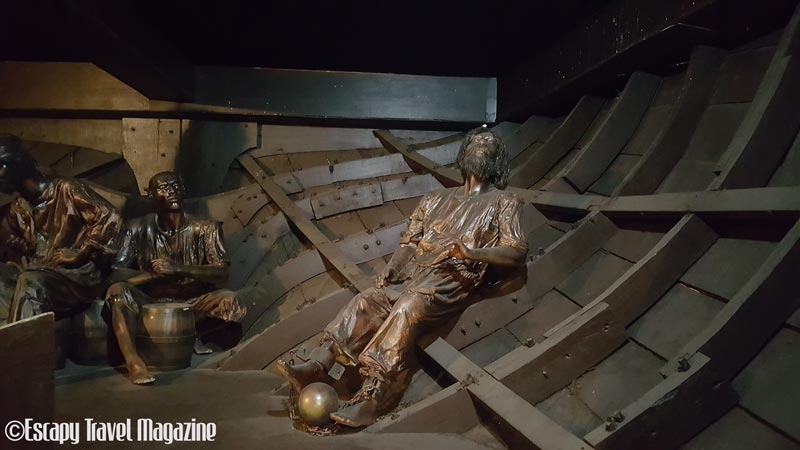
Diorama of the prison on board the Flor De La Mar.
A Few Friendly Tips Before You Sail
One curious tradition awaits before boarding. Shoes stay outside. Both the Flor de la Mar replica and the Samudera Maritime Museum require visitors to remove their footwear. Save yourself the balancing act worthy of a circus performer and wear sandals or slippers.
Comfortable clothing is another wise choice. The replica ship can become rather warm on hot afternoons, especially if the air conditioning decides it deserves a holiday. Meanwhile, the Samudera building can feel surprisingly chilly, so bringing along a light jacket is not a bad idea.
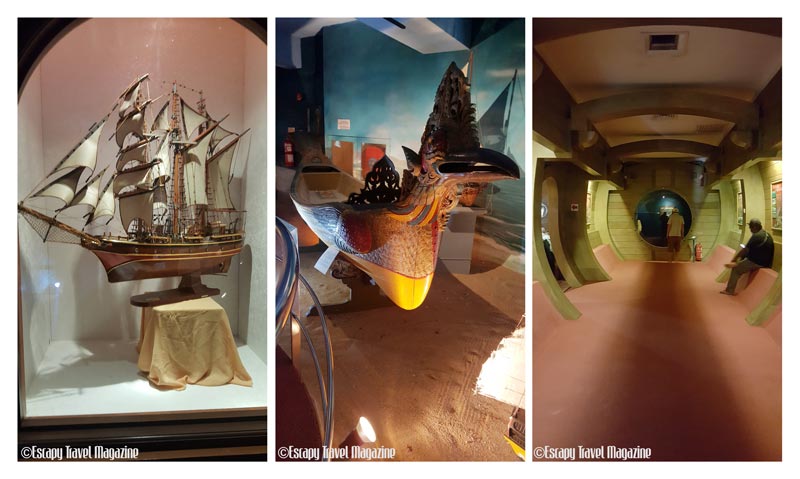
Left: a model of a ship that used to sail the waters off Malacca. Center: A boat that belongs to the Kelantan royals. Right: The entrance of the Samudera Maritime Museum.
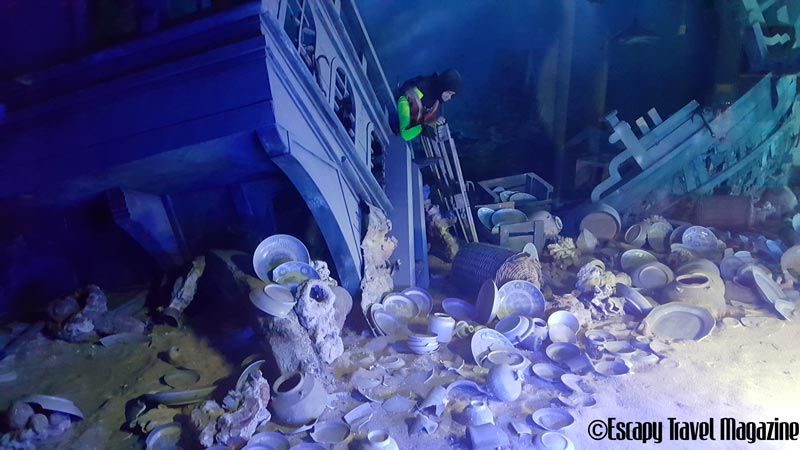
A diorama depicting a scene where a diver is seen salvaging items from a wreckage.
Final Thoughts
The Maritime Museum of Melaka is far more than a collection of old ships and dusty artefacts. It is the story of a city that changed the world simply because of where it stood. It is a tale of merchants chasing fortunes, kings defending kingdoms, explorers crossing impossible oceans and one legendary ship that carried unimaginable riches before vanishing into the sea.
Stand on the deck of the Flor de la Mar. Look towards the Strait of Melaka. Imagine hundreds of sails stretching across the horizon. Then ask yourself one question. If the greatest treasure ship of the Age of Exploration really is still down there somewhere… who will find it first?
Since you have read all the way to the very end, here is a little gift for you… Is this replica Portuguese carrack the Flor de la mar, or is its name really the Frol de la Mar? Click here for “Deep Dive”…
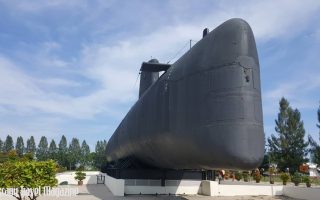
Malacca used to be a very important maritime hub and thus maritime museums are a must visit. The Submarine Museum in Malacca gives one the opportunity to see what the inside of an old submarine looks and feels like.
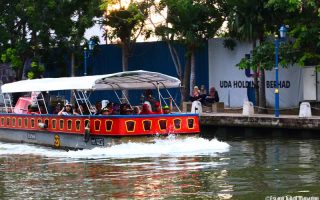
A cruise on the Melaka River is a relaxing experience. Melaka River snakes through a part of Malacca’s historical city making it a relaxing way to enjoy the sights.
Directed by Wang Chaoge, the more well known for the opening ceremony of the 2008 Olympic Games in Beijing (co-director); Encore Melaka tells a story about Malacca and its history as well as a story of its people.