The Stadhuys (pronounced stod-hash) practically grabs you by the shirt, points dramatically across Dutch Square, and bellows, “I’ve seen things you wouldn’t believe.” And you’ve better believe it. It certainly has seen a lot more that what most mind can fathom.
For more than three and a half centuries, this remarkable building has watched empires arrive with flags flying, cannons booming, and confidence overflowing. Then, one by one, they packed their bags and left. The Stadhuys simply stayed put, looking rather pleased with itself.
Melaka has lived many lives. It flourished as the mighty Malay Sultanate before the Portuguese stormed in during 1511 and built the mighty A’Famosa fortress, churches, and military strongholds. In 1641, after a lengthy siege carried out by the Dutch East India Company with the support of the Johor Sultanate, the Dutch finally captured Melaka. They would rule the city until 1824, apart from the temporary British occupation during the Napoleonic Wars between 1795 and 1818.
The yard of the Stadhuys.
Unlike the Portuguese, the Dutch had little interest in using Melaka as a launch pad for conquering the Malay Peninsula. Their agreement with Johor ensured peace in the region, allowing them to focus on trade and administration instead. They strengthened A’Famosa, improved the town, expanded its streets, and built solid civic buildings that still dominate Melaka today. The crowning jewel of those achievements is undoubtedly the Stadhuys.
The name comes from the old Dutch word meaning “City Hall”. In modern Dutch, it is spelled “Stadhuis”, but the older spelling has remained part of Melaka’s identity.
Completed around 1650, the Stadhuys became the official residence of the Dutch Governor as well as the administrative headquarters of the colony. It is widely regarded as the oldest surviving Dutch colonial building in the East, and many historians consider it one of the oldest surviving VOC (Vereenigde Oostindische Compagnie) buildings anywhere in Asia.
Thick brick walls, enormous hardwood doors, heavy timber beams, elegant shuttered windows, and practical Dutch colonial design allowed it to withstand centuries of tropical heat, monsoon rain, wars, and the occasional tourist who insists on leaning against everything for a selfie.
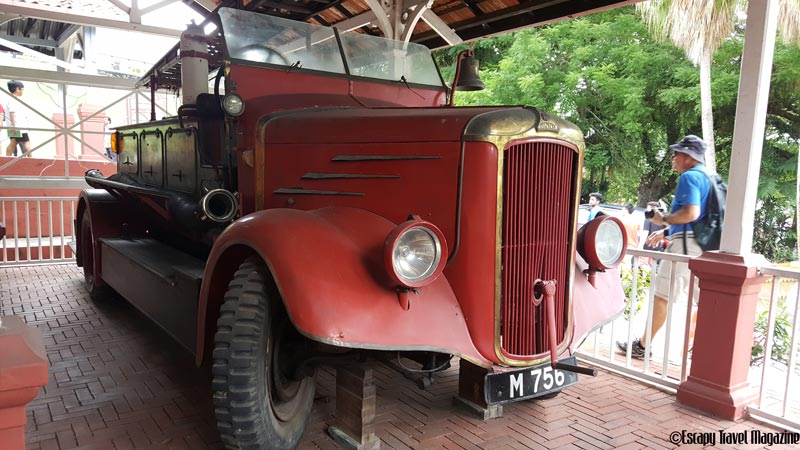
An old fire engine by the side of the Stadhuys.
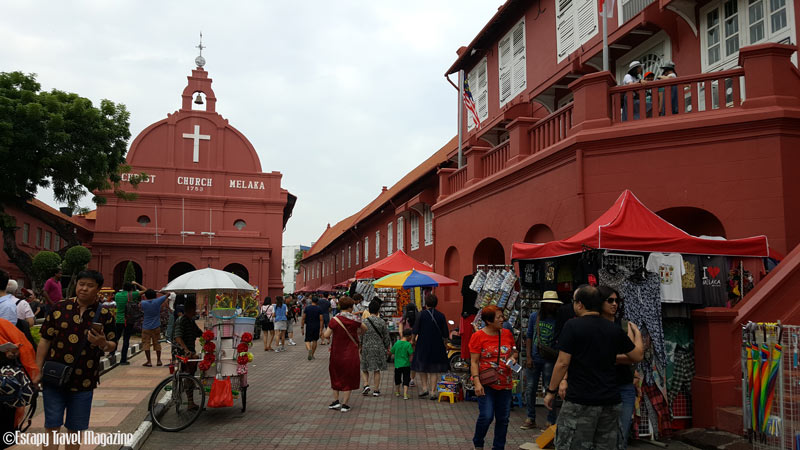
Now, about that famous colour. Most people assume the Dutch adored bright red buildings. Not quite. Originally, the Stadhuys was painted white, just like many Dutch colonial buildings throughout the Dutch East Indies. The striking red colour that has become the symbol of Melaka was introduced much later during British rule. Today, it is impossible to imagine Dutch Square without its sea of crimson walls glowing beneath the tropical sun. They have become one of the most photographed sights in Malaysia.
There is another fascinating secret hidden inside these walls. The Stadhuys was designed after the original Stadhuis in Hoorn, the Netherlands. That Dutch building stood proudly from the fifteenth century until structural problems forced its demolition in 1797. Ironically, while the original disappeared from Europe, its architectural cousin continues to stand proudly in Melaka. If you have ever wondered what Hoorn’s old city hall looked like centuries ago, one of the best surviving answers is not in Europe. It is here, in the heart of Melaka.
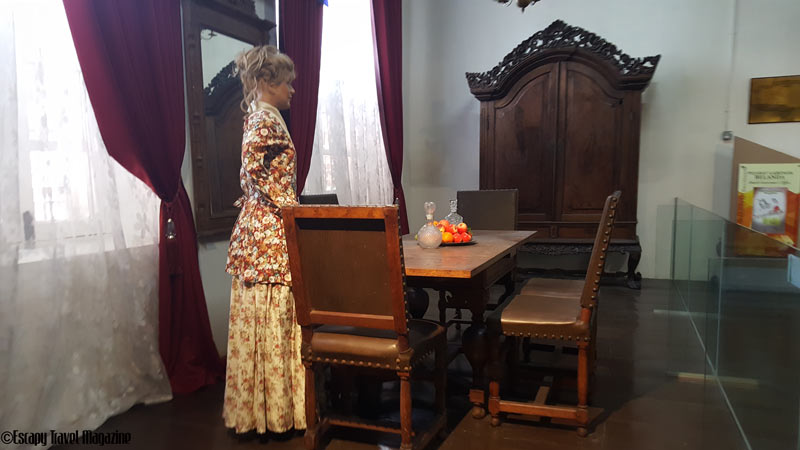
A diorama depicting live in the Stadhuys during the colonial era.
History does enjoy a good plot twist… Step inside and the building reveals that it was far more than just an office. Wander through the spacious courtyards and you’ll discover kitchens, including the old bakery, service areas, prison cells, administrative rooms, and the elegant Governor’s residence. Suddenly, the building transforms from an attractive landmark into a bustling colonial headquarters where governors signed documents, soldiers marched through the corridors, merchants negotiated fortunes, and prisoners probably wished they had made better life choices.
The Governor’s Museum offers an intimate glimpse into the daily life of the Dutch Governor and his family, complete with carefully recreated living quarters that transport visitors back to the seventeenth century.
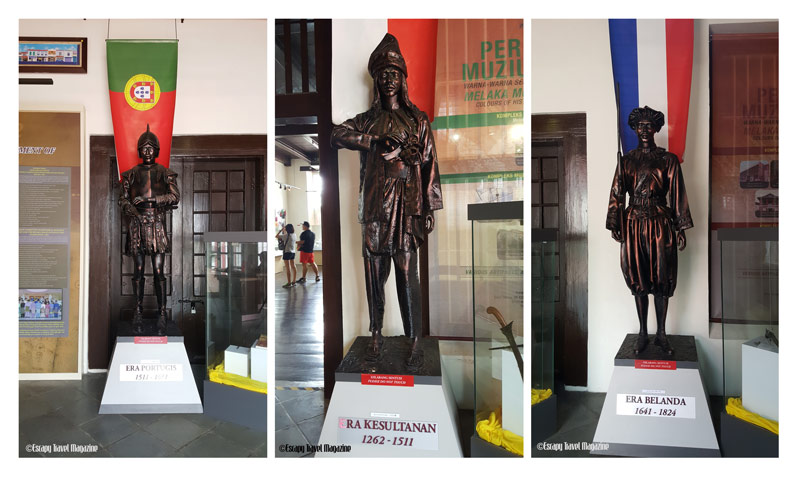
Some of the metal statues of soldiers from back in the day. Left: a Portuguese soldier. Centre: a Malaccan warrior. Right: A Dutch soldier.
The Stadhuys complex also houses several museums and galleries that together tell the remarkable story of Melaka’s multicultural past. Among them are:
* History and Ethnography Museum
* Literature Museum
* Education Museum
* Democratic Government Museum
* Governor’s Museum
* Admiral Cheng Ho Gallery
Each museum uncovers another layer of Melaka’s incredible journey. Portuguese explorers. Dutch merchants. British administrators. Malay rulers. Chinese traders. Baba Nyonya culture. Maritime adventures. Ancient artefacts. Forgotten documents. Every room answers one question while quietly asking three more. That is the magic of the Stadhuys. It does not simply display history behind glass.
The Stadhuys on the right and Christ Church Melaka on the left. They are red in colour.
It challenges you to imagine the footsteps echoing across its stone floors. The heated arguments inside the Governor’s office. The smell of fresh bread drifting from the old bakery. The nervous prisoner staring through iron bars. The Dutch officials peering from upstairs windows as ships entered the harbour carrying unimaginable wealth from every corner of Asia.
Outside, thousands gather every day to photograph the famous red buildings. Inside, surprisingly few venture beyond the entrance, which is rather fitting. Because the greatest stories are often hidden behind the most familiar doors. The Stadhuys is not merely another museum. It is the stage where nearly four centuries of Melaka’s remarkable history continue to perform, patiently waiting for the next curious visitor to walk through its doors.
Additional Information
The Stadhuys Melaka
Address: 31, Jalan Laksamana, Banda Hilir, 75000 Melaka, Malaysia.
Operating Hours: Mondays to Thursday 9:00am to 5.30pm
Fridays 9am to 12:15pm, 2:45pm to 9:00pm
Saturdays and Sundays 9:00am to 9:00pm
Contact: +606 333 33333 (PERZIM or Malacca Museum Corporation)
Note:To locate the entrance to the Stadhuys, head to the History And Ethnography Museum.
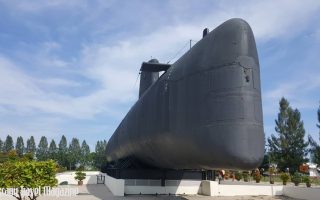
Malacca used to be a very important maritime hub and thus maritime museums are a must visit. The Submarine Museum in Malacca gives one the opportunity to see what the inside of an old submarine looks and feels like.
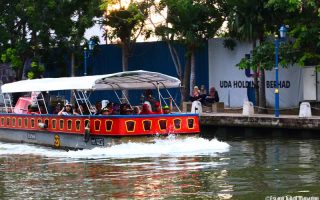
A cruise on the Melaka River is a relaxing experience. Melaka River snakes through a part of Malacca’s historical city making it a relaxing way to enjoy the sights.
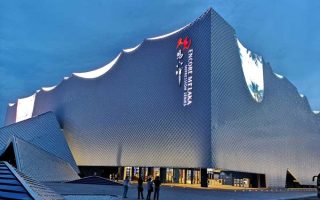
Directed by Wang Chaoge, the more well known for the opening ceremony of the 2008 Olympic Games in Beijing (co-director); Encore Melaka tells a story about Malacca and its history as well as a story of its people.