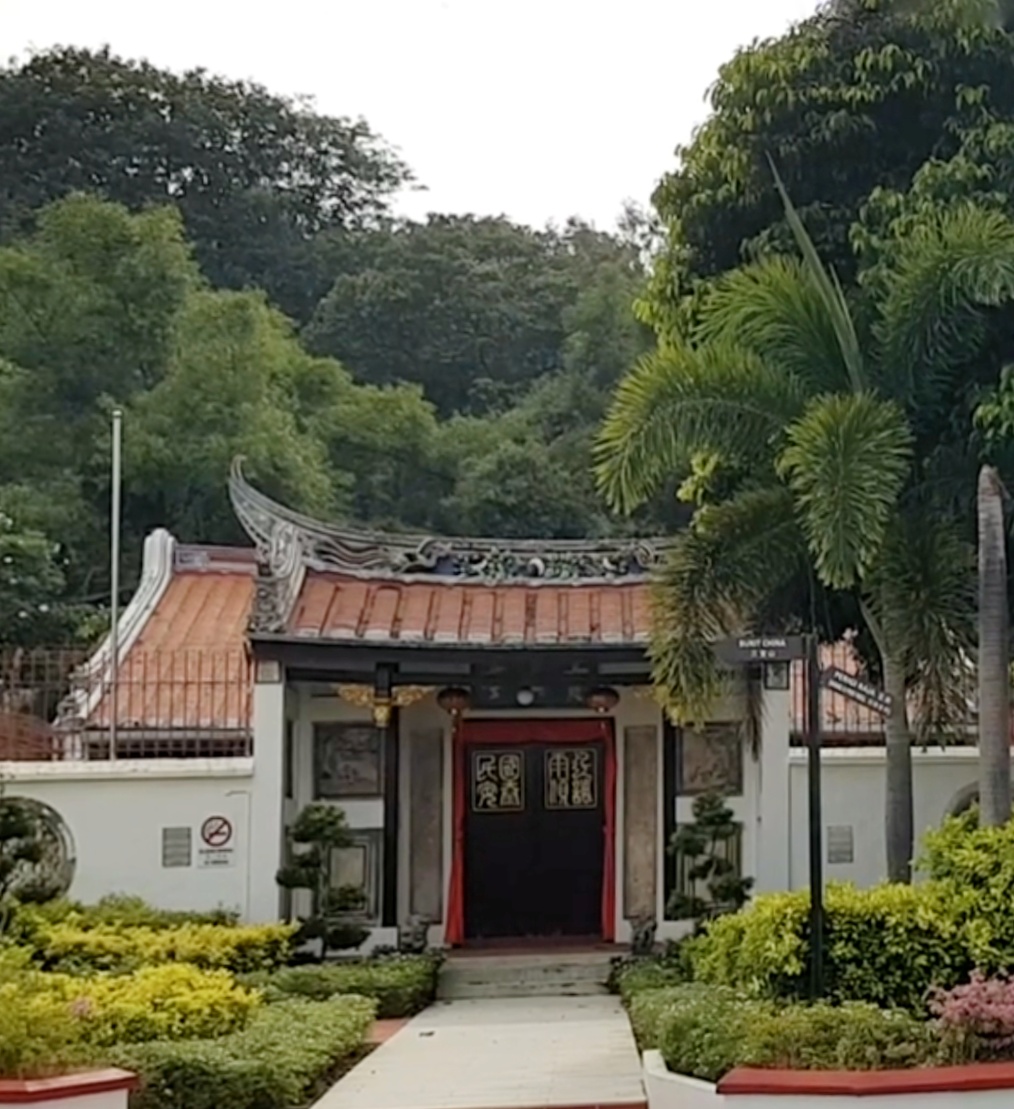
Hidden at the foot of Bukit Cina sits Hang Li Poh’s Well, also known as Perigi Raja or King’s Well. It sits there quietly collecting coins, photographs, whispered wishes and, perhaps most importantly, centuries of unanswered questions.
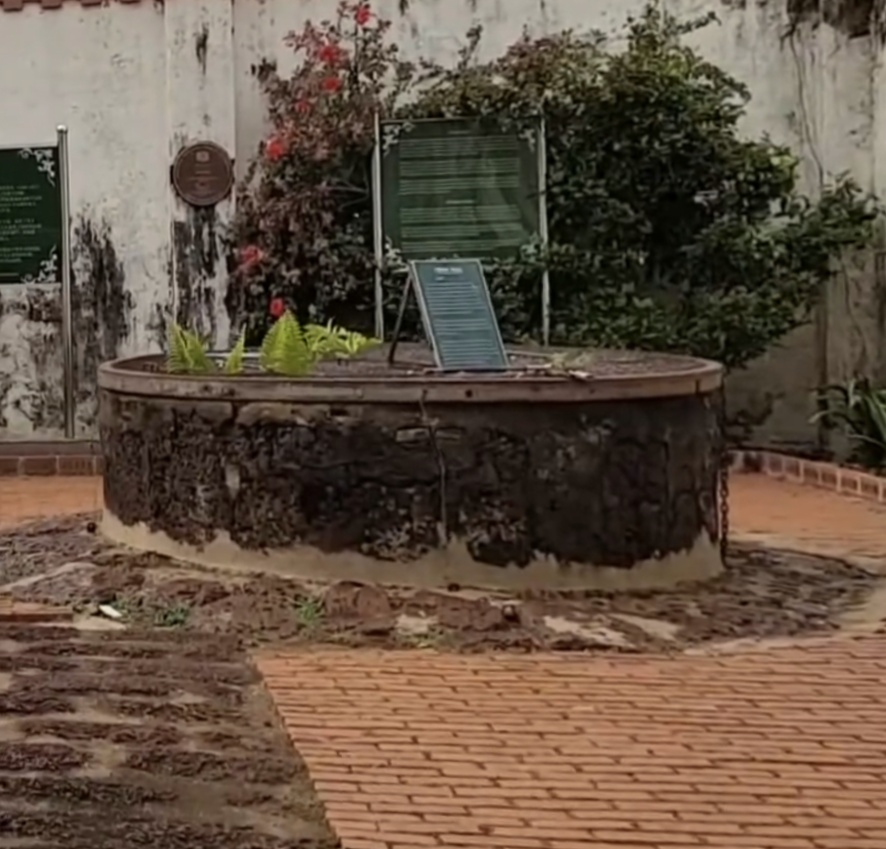
At first glance it looks rather innocent. It is round with a metal cage covering it. Probably placed there to avoid the more adventurous folks, climbing in. It is really old, and has “magic” water. Magic water? Well, yes. Nothing particularly dramatic. It has been said that anyone who drinks the water of this well will return to Melaka. If you want to scratch you head, and roll your eyes at this juncture, go ahead.
Yet this humble well has survived sultans, Portuguese cannons, Dutch engineers, British neglect, Japanese occupation, the independence, millions of tourists, countless selfies, and enough legends to fill several libraries. Not bad for a hole in the ground.
According to the traditional Malay narrative recorded in the Sulalatus Salatin or Malay Annals, Sultan Mansur Shah ordered the construction of the well around 1459 for his Chinese bride, Hang Li Poh, after she and her entourage settled on Bukit Cina. The hill became home to members of her retinue, while the well supplied fresh water for daily life. Wah! Simple, elegant, and romantic.
There is only one tiny complication. History refuses to sit quietly and play parts written by “play writers.” It calls to us with questions such as, did Hang Li Poh actually exist?
Now things become wonderfully interesting. I did learn in school decades ago the history of Hang Li Poh coming to Melaka, marrying Sultan Mansur Shah, and all of that. Many tourism brochures too confidently present Hang Li Poh as a Ming princess sent by the Chinese Emperor to marry Sultan Mansur Shah. It makes for an excellent story, but it is also a story that deserves careful examination.
Hang Li Poh’s well, or Perigi Raja (King’s Well).
Modern historians have pointed out that no surviving Ming imperial records mention a princess named Hang Li Poh marrying the Sultan of Melaka. Portuguese writer Tomé Pires, whose Suma Oriental is among the earliest European descriptions of Melaka, also tells a rather different story involving an unnamed Chinese woman connected with an earlier ruler instead.
This does not automatically mean Hang Li Poh never existed. No, not at all. It simply means the evidence is more complicated than many guidebooks suggest. Researchers repeatedly encouraged readers to separate tradition from documented evidence. Rather than accepting every popular tale as unquestionable fact, we are urged to compare Malay chronicles, Chinese imperial records, Portuguese accounts, and archaeological evidence before reaching conclusions.
That is not attacking history. That is doing history. Needless to say, the choice to get involved with doing history, and diving deeper into the abyss of history is totally up to you. Most happily accept the given information especially since their no history buffs, and be perfectly happy.
If The Princess Is Uncertain, What About The Well?
Ironically, the well itself is much easier to believe than the princess. The physical well does exist. It is genuinely old. It has been there for centuries providing drinking water, killing soldiers, and quietly witnessing wars.
Whether it was originally dug specifically for Hang Li Poh, for a royal settlement, or for another practical purpose is a question historians continue to discuss. Sometimes archaeology is wonderfully awkward.
Think about this for a moment. The well is indeed there. That did not change, and has stood there throughout the flow of time. What then can change? The stories. The stories can certainly change depending on who tells it.
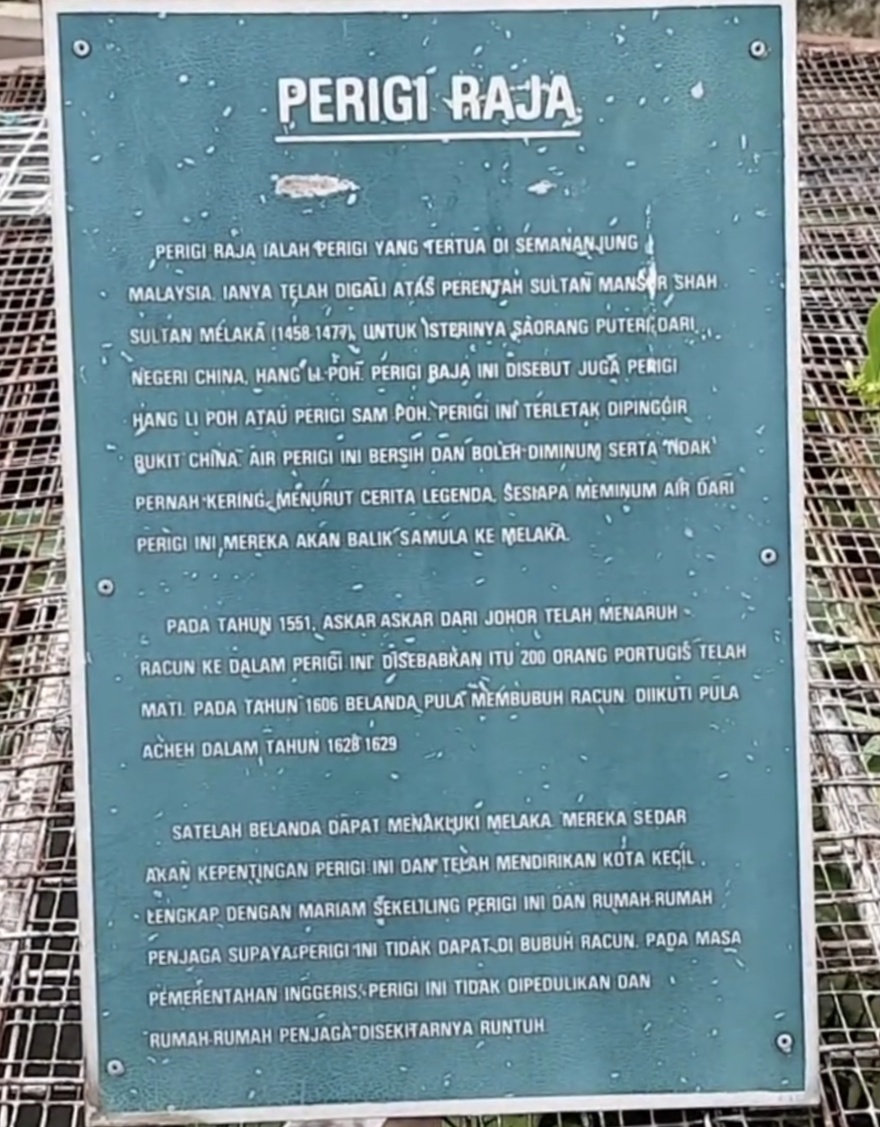
Description of the well atop the well. It shares about the building of the well, how it was used to poison people during different battles, how the Dutch protected it with canons, and how the British left it to dilapitate slowly.
Anyway, today we buy bottled water without thinking. We have water dispensers that dispenses hot, cold, and room temperature water without us doing much thinking. Fifteenth century Melaka had a rather different problem than what we now have. Back then water was harder to get. Fresh water meant survival. People need it. Ships could not sail without it lest the sailors die of dehydration at sea. Townships could not grow without it. Armies certainly could not fight without it. Whoever controlled reliable fresh water controlled life itself.
That explains why, after capturing Melaka in 1511, the Portuguese immediately secured the well as one of their important water sources. Later, the Dutch strengthened its protection by surrounding it with sturdy walls and defensive structures because they understood exactly how valuable it was. After all, nobody builds fortifications around something unimportant.
A Well Worth Poisoning
Here is a detail that appears on the tourist signboard at the well. Two hundred Portuguese people died having drank water from the well that had been poisoned by soldiers from Johor. Several historical accounts describe attempts to poison the well during further conflicts and struggles involving the Dutch, and Acehnese. While individual details differ between sources, they all reveal one remarkable truth. The well was considered a strategic military target. In medieval warfare, clean drinking water could decide who lived and who died.
The Well That Never Gives Up
Locals often claim the well has never run dry. Whether literally true throughout every drought is difficult to verify, but at time of our visit, it certainly is not dry. What can be said is that the well became famous because of its dependable water supply, earning a reputation that survived hundreds of years. That reputation alone tells us how essential it once was.
Today, visitors toss coins into it and make wishes. The Dutch probably never imagined that one day tourists would voluntarily throw money into the very water they once defended with walls and guards.
Now, as I stand here and look at this well, I cannot help but wonder, what if the greatest treasure at Hang Li Poh’s Well is not the water? What would it be? To me its curiosity.
Instead of asking, “Is this where the Chinese princess fetched water?” Perhaps ask…
Which parts of the Hang Li Poh story come from the Malay Annals?
Why do Chinese imperial records remain silent?
Why does Tomé Pires tell a different story?
How much of Bukit Cina’s early history can archaeology actually confirm?
Which traditions grew over time, and which are supported by contemporary evidence?
Why do tourism narratives often present legends as established facts without explaining the historical debate?
These questions do not diminish Melaka’s history. Not at all. They enrich it. Because real history is rarely a fairy tale. It is usually stranger, messier, and far more exciting.
So, if you decide to visit Melaka, and find yourself standing beside the ancient stones of Hang Li Poh’s Well, resist the temptation to throw in a coin immediately. Instead, throw in a question. You may discover that questions echo much longer than wishes.
Additional Information
Hang Li Poh’s Well / Perigi Raja (King’s Well)
Address: Jalan Puteri Hang Li Poh, Kampung Bukit China, 75100 Melaka, Malaysia.