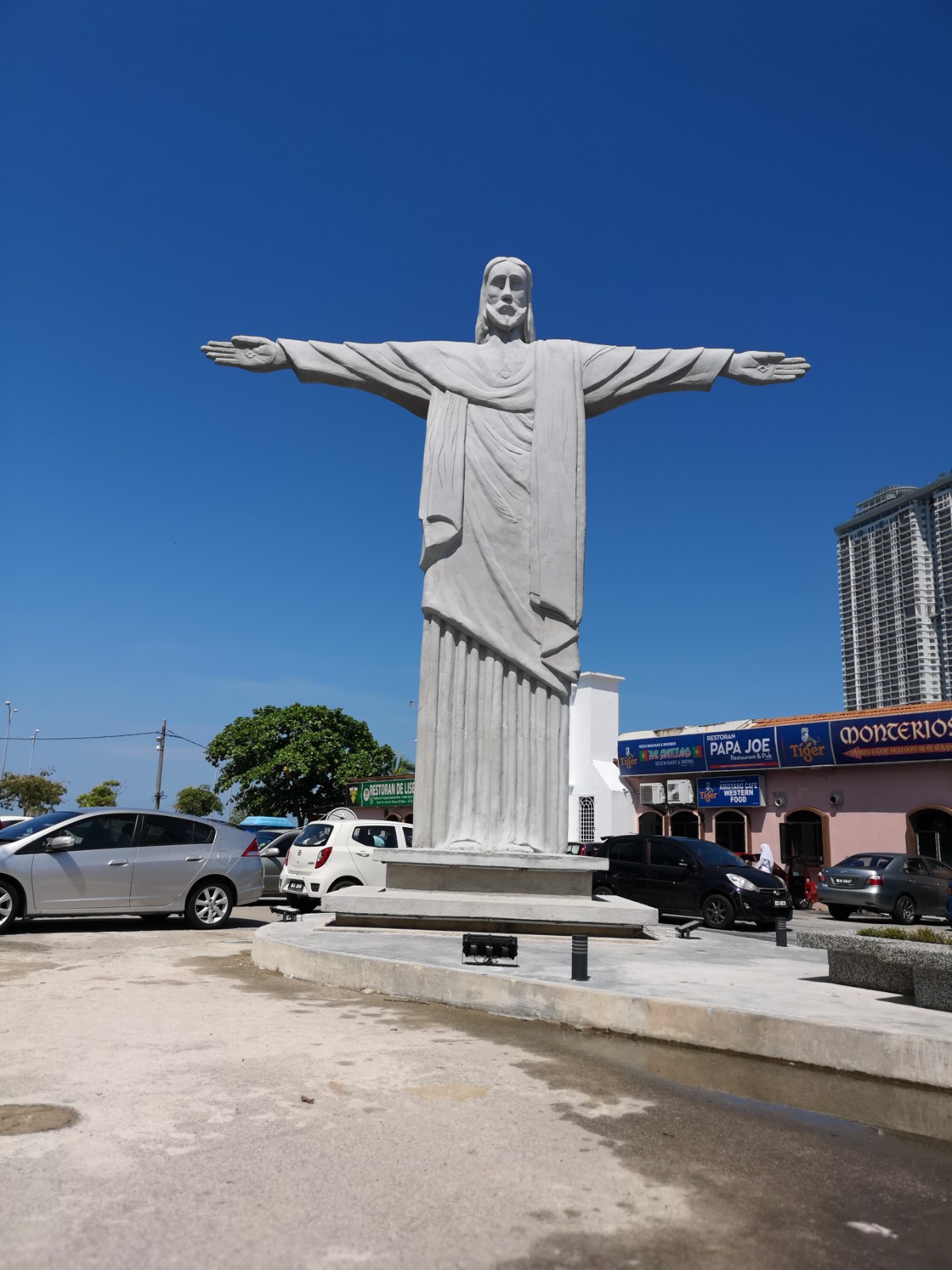
The statue of Christ the Redeemer at the Portuguese Settlement.
Every great adventure begins with a wrong turn. Ours began with the smell of grilled fish. Not just any grilled fish. This was the sort of aroma that could make a disciplined monk abandon meditation, persuade a strict doctor to postpone a diet, and convince even the most determined tourist that calories are merely tiny love letters from heaven.
Somewhere beyond the bustling streets of Melaka, tucked beside the Straits of Melaka, lies a village that feels oddly disconnected from time. It is not hidden behind enchanted forests or protected by dragons. Instead, it hides in plain sight, quietly waiting for those curious enough to wander off the usual tourist trail.
Welcome to the Portuguese Settlement
…or as the locals affectionately call it, Kampung Portugis. The first surprise? It is not over five hundred years old. Many visitors assume this village has stood here since the days when Portuguese ships first sailed into Melaka in 1511 under. That would make for a splendid tale. Unfortunately, history enjoys ruining perfectly good stories.
The present Portuguese Settlement was established much later, in 1933. It was the vision of a French Catholic missionaries, who wanted to provide homes for the descendants of Melaka’s Portuguese Eurasian community, many of whom were fishermen struggling to preserve both their livelihoods and their unique identity. Sometimes the greatest treasures are not ancient ruins. Sometimes they are people.
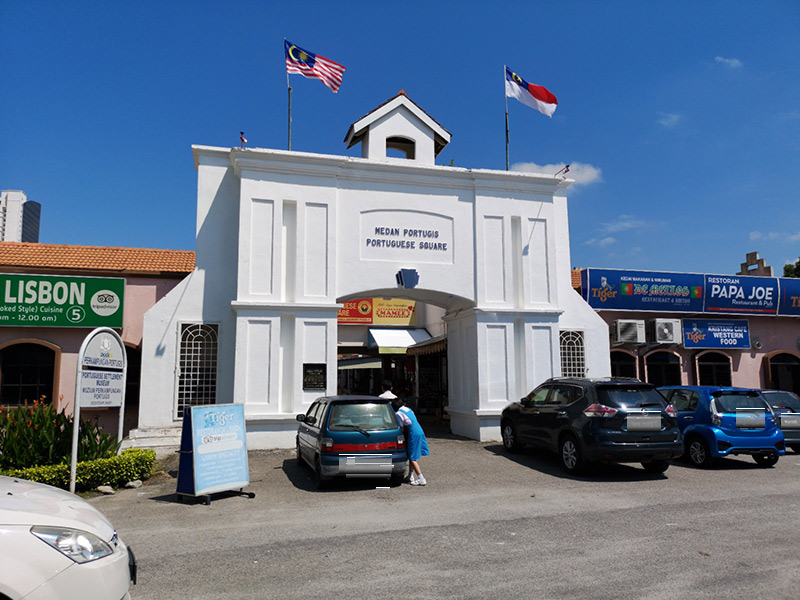
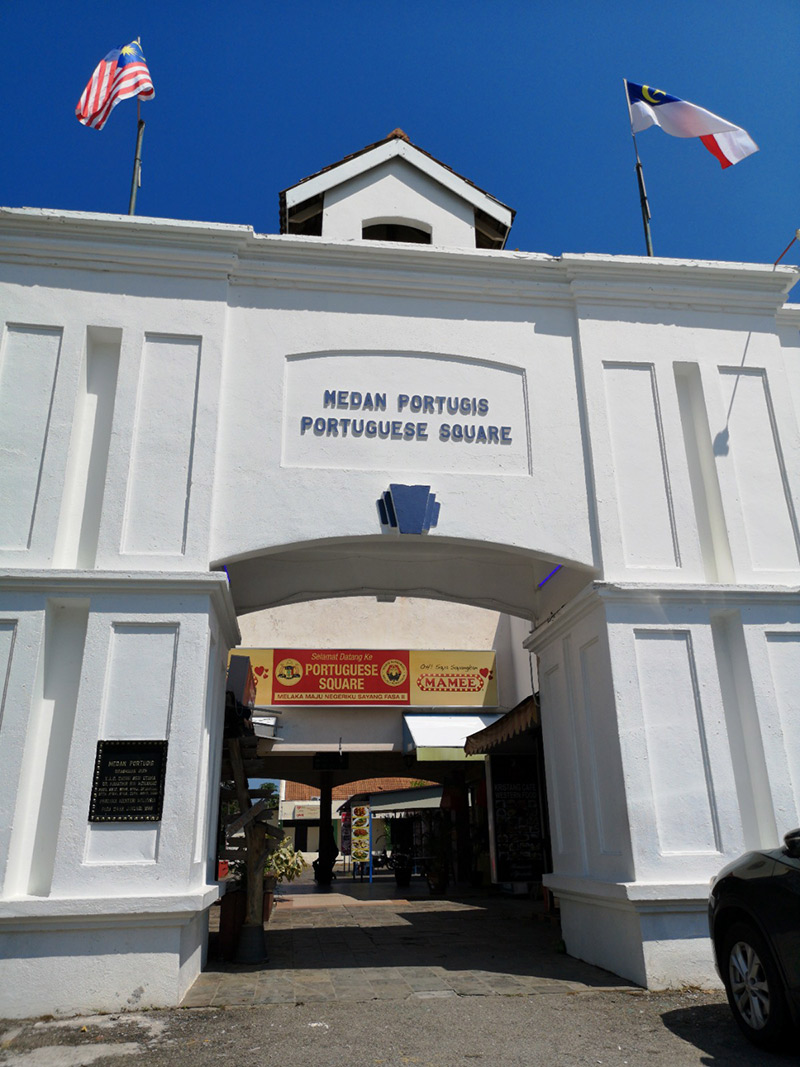
The entrance to the Portuguese Square.
Walking through the settlement feels rather like stepping through an invisible doorway. Modern Malaysia suddenly begins speaking with an old Portuguese accent. Well… sort of.
The language heard here is Kristang, also known as Cristão. It is one of Southeast Asia’s rarest living creole languages, blending sixteenth century Portuguese with Malay, and influences from many other cultures. Listen carefully and you may catch words that sailed across half the world aboard wooden ships centuries ago.
Languages usually disappear quietly. Kristang refuses to, and that is amazing. It clings on with remarkable determination, passed from grandparents to grandchildren like a treasured family recipe that nobody dares alter. That alone makes this little village extraordinary.
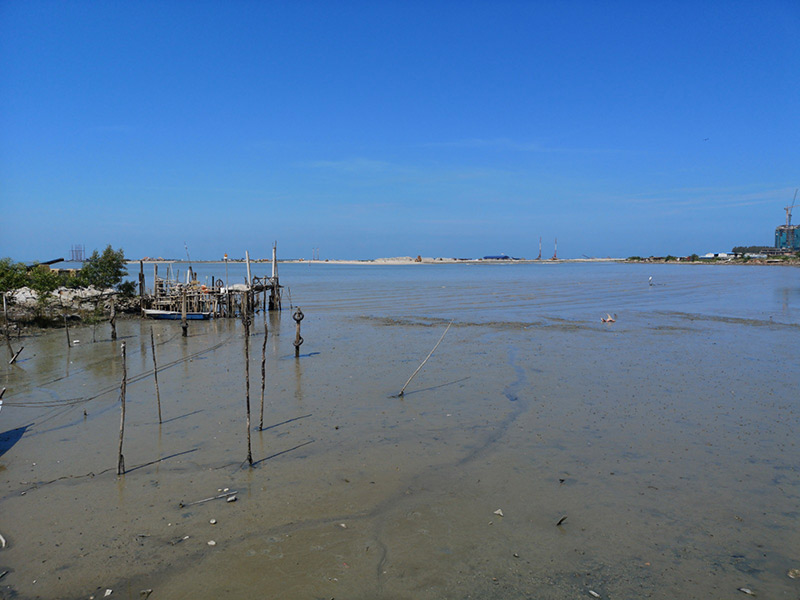
The view of the sea from the Portuguese Settlement.
Then there is the sea… the Straits of Melaka have never been gentle spectators. They have watched Arab traders, Chinese fleets, Portuguese caravels, Dutch warships, British merchants, Japanese occupation forces, and modern container ships pass almost endlessly across the horizon. If oceans could gossip, this stretch of water would never stop talking.
Standing along the waterfront at sunset feels strangely cinematic. One almost expects a sleek speedboat to emerge from the fading light. Somewhere nearby, a mysterious stranger adjusts an expensive watch, receives coded instructions through an earpiece, and disappears into a seafood restaurant before anyone notices. The only flaw in this fantasy? The mysterious stranger is probably ordering chilli crab.
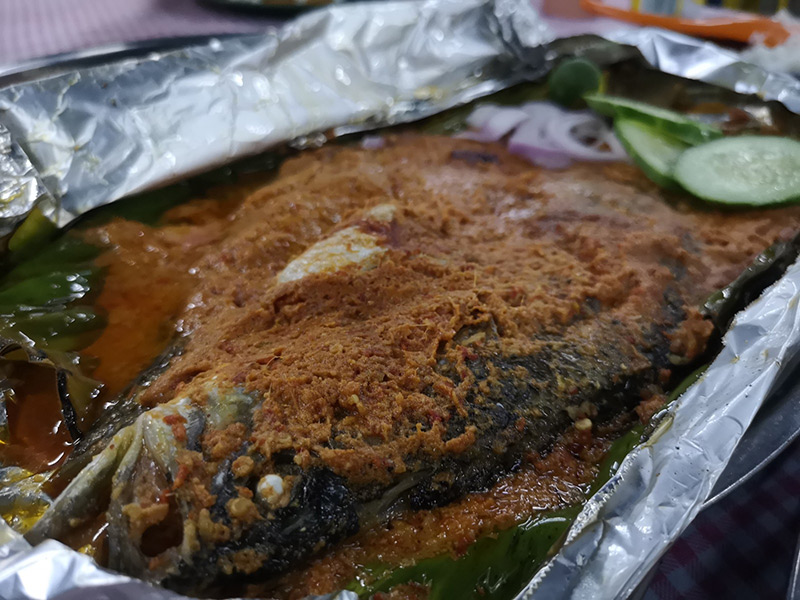
Delicious Portuguese ikan bakar (Portuguese Grilled Fish) at the Portuguese Square.
The restaurants here have become legendary. Fresh grilled stingray, Portuguese baked fish, squid kissed by charcoal flames, prawns large enough to make ordinary shrimp question their career choices, and of course, devil curry.
Despite its alarming name, Devil Curry is less interested in stealing souls than stealing your attention. This fiery Eurasian dish combines vinegar, chillies, spices and tradition into something wonderfully unforgettable. Like many family recipes here, every household insists theirs is the authentic version. Every family is wrong except their own.
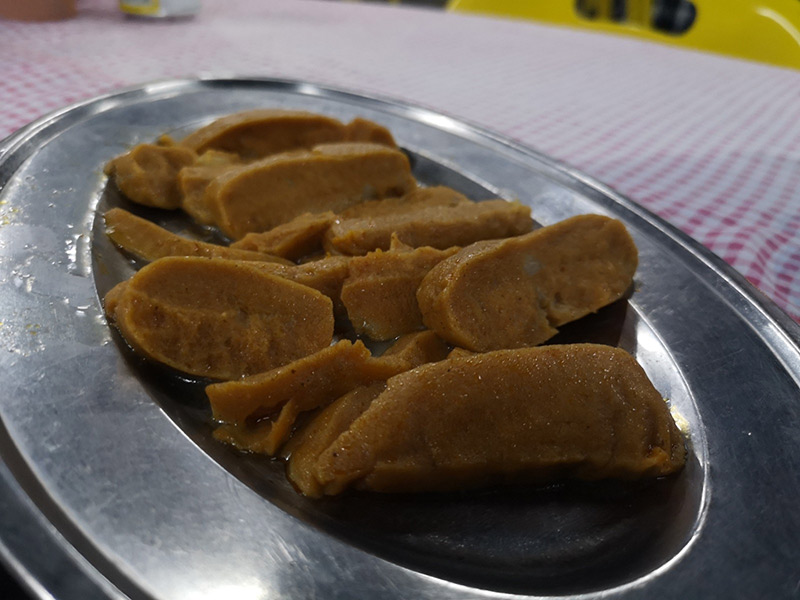
Delicious otak-otak at Portuguese Square.
Then comes Christmas, the best time to visit Portuguese Settlement. Most destinations decorate themselves for the festive season. The Portuguese Settlement transforms
Thousands upon thousands of lights cover homes, gardens and streets. Families compete with cheerful determination to create increasingly spectacular displays. Visitors arrive from across Malaysia and overseas, wandering through glowing lanes that resemble a festival where Christmas decided to invite a tropical island.
Music drifts through the warm evening air, children laugh, neighbours welcome strangers. For a few magical weeks, an ordinary fishing village becomes one of Malaysia’s most joyful celebrations. It reminds us that heritage is not preserved inside museums alone. Sometimes it is preserved with laughter. Sometimes with songs.
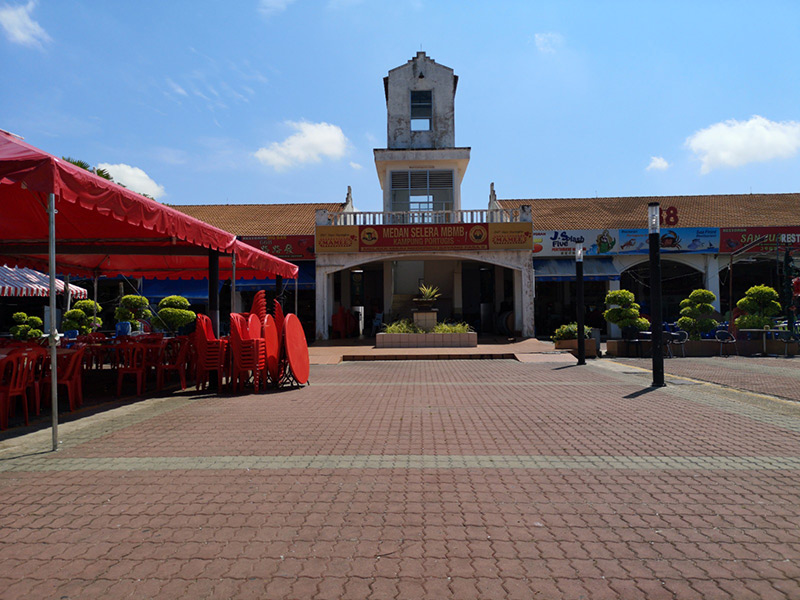
The food area of Portuguese Square.
Of course, history here is layered with complexity. Although the Portuguese conquered Melaka in 1511, their political rule ended in 1641 when Dutch forces captured the city after a lengthy siege. Yet the descendants of Portuguese settlers, local marriages, and Eurasian families remained. Over generations, they developed a culture uniquely their own. They are not simply Portuguese. They are unmistakably Melakan.
Too often history is presented like neat rows of dates, and real history is wonderfully untidy. People fall in love, families grow, cultures blend, recipes evolve, languages borrow words, music changes rhythm, and communities thrive. The Portuguese Settlement is living proof that identity is rarely frozen in time. It grows, adapts and occasionally serves excellent seafood.
This is where to go for Portuguese food… Portuguese Square.
As darkness settles across the Straits, fishing boats gently rock against the tide. The sea appears calm. Almost too calm. Somewhere beneath those quiet waves lie forgotten anchors, broken ceramics, lost cargoes and perhaps stories that historians have yet to discover. Every passing tide shifts another handful of sand, revealing one secret while hiding another.
This raises an irresistible question… If a community founded in 1933 still carries echoes of voyages that began more than five centuries ago, what other forgotten stories are still waiting beneath the waters of Melaka, patiently waiting for someone curious enough to follow the whispers of the sea?
Additional Information
Portuguese Settlement Melaka
Address: Jalan Daranjo, Perkampungan Portugis, 75050 Melaka, Malaysia.