Mini Malaysia and ASEAN Cultural Park (Malaysia Heritage Stuios) – Lookout For Updates to this Article
A Little Malaysia in One Place
By Ben | Escapy Travel
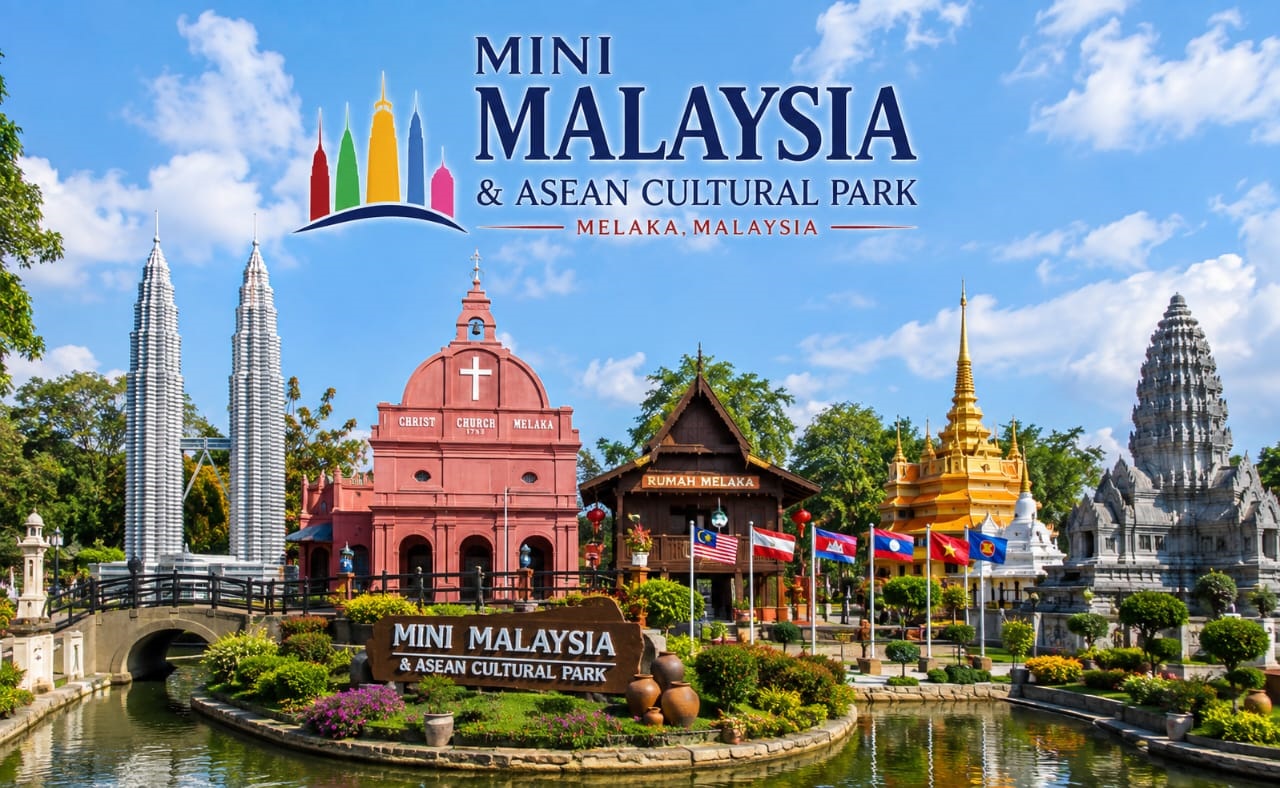
Mini Malaysia and ASEAN Cultural Park, Melaka. (This image is AI generated, as our photos are no longer available).
What if it were possible to explore the traditional architecture of Malaysia without driving from Perlis to Johor, then boarding a plane to Sabah and Sarawak? That is essentially the idea behind Mini Malaysia and ASEAN Cultural Park in Ayer Keroh, Melaka.
It is a cultural park designed to bring together traditional houses representing Malaysia’s 13 states, along with traditional houses from several ASEAN countries. It is, in other words, Malaysia with rather less mileage. And that is a surprisingly useful thing.
Malaysia, Without the Endless Driving
Mini Malaysia was officially opened on 17 July 1986, while Mini ASEAN was opened on 3 September 1991. Both were officially opened by then Prime Minister Dr Mahathir Mohamad. The Malaysian section features traditional houses representing all 13 Malaysian states. That means visitors can encounter architectural traditions from Perlis, Kedah, Penang, Perak, Selangor, Negeri Sembilan, Melaka, Johor, Pahang, Terengganu and Kelantan, together with traditional houses representing Sabah and Sarawak.
For anyone interested in Malaysian heritage, this creates an interesting opportunity. The houses are not simply buildings placed around a park for decoration. They represent different architectural traditions that developed across Malaysia’s regions. And once the differences become noticeable, the place becomes considerably more interesting.
There are different roof designs, different layouts, different construction techniques, different decorative details, and all of them reflect the environments, lifestyles and cultures from which they originated. It is architecture doing what architecture has always done best; telling stories without saying very much.
Then Comes ASEAN
The cultural journey does not stop at Malaysia’s borders. The ASEAN section features traditional houses representing Thailand, the Philippines, Brunei, Indonesia, Singapore and Vietnam. This gives visitors an opportunity to compare the architectural traditions of several Southeast Asian countries in one location.
There is something particularly useful about seeing them side by side. Southeast Asia is often spoken about as though it were one enormous cultural soup. It isn’t. There are obvious connections between neighbouring countries, but there are also remarkable differences in architecture, traditions and ways of life.
Mini ASEAN provides a convenient introduction to some of those differences. And unlike trying to visit every country individually, it does not require a passport, airport security or the inevitable argument about who forgot to pack the phone charger.
More Than Traditional Houses
The park also offers more than architecture. Its visitor activities have included traditional cultural performances and games, along with recreational activities such as horse riding, kayaking and fishing. This makes the attraction suitable for more than visitors who can happily spend an afternoon discussing roof structures.
Families, in particular, can find plenty to explore. Children can encounter traditional architecture and cultural elements in a physical setting rather than simply seeing them in a textbook or on a screen. That is increasingly important. Heritage is much easier to understand when it can actually be seen.
A Different Kind of History Lesson
There is a tendency to think of history as something involving dates, names and examinations. But buildings shares lots of history too. A traditional house can reveal how people lived, what materials were available, how they responded to the climate and what was important to their communities.
The architecture of Malaysia is particularly interesting because the country contains such a wide variety of geographical and cultural environments. What works in one region may not necessarily make sense in another. So the houses at Mini Malaysia provide an opportunity to appreciate that diversity in one place. It is a little like opening a very large Malaysian history book, except the pages have roofs and stairs.
A Useful Stop in Melaka
Mini Malaysia and ASEAN Cultural Park is located in Ayer Keroh, one of the main areas for attractions outside central Melaka. It offers something different from the historic streets, museums, food and colonial-era buildings for which Melaka is famous. That makes it particularly useful for visitors who want to add something cultural and educational to a Melaka itinerary.
It can also be a good option for families looking for an attraction where younger visitors can move around while being introduced to Malaysian heritage. Just don’t arrive expecting to spend five minutes looking at a couple of miniature buildings before heading off for lunch. There is considerably more to explore. Comfortable footwear is therefore a sensible investment. Your feet may not understand the importance of cultural preservation, but they will certainly have an opinion about it.
Why Mini Malaysia Still Matters
Attractions such as Mini Malaysia and ASEAN Cultural Park serve an important purpose. Malaysia is changing rapidly. Cities grow, old buildings disappear, lifestyles change and traditional skills can become less common. Preserving examples of traditional architecture allows future generations to see something of the country’s cultural diversity.
It also gives visitors a chance to understand that Malaysian identity is not represented by one single architectural style, one food, one tradition or one community. It is considerably more complicated, and considerably more interesting.
A Small Park With a Big Story
Mini Malaysia and ASEAN Cultural Park may not have the scale of a major theme park, nor does it need to. Its attraction lies in something much simpler. It brings together examples of traditional architecture and cultural heritage from Malaysia and ASEAN, allowing visitors to explore a remarkable amount of Southeast Asian diversity within one destination.
For travellers interested in culture, architecture, families looking for something different, or anyone who simply wants to understand Malaysia beyond shopping malls and modern city skylines, it is an attraction worth considering. Because sometimes, seeing the whole country in miniature makes it easier to appreciate just how large the real story is.
Additional Information
Mini Malaysia And ASEAN Heritage Park Melaka (Malaysia Heritage Studios)
Address: Exit Lebuh Ayer Keroh, 75450 Melaka, Malaysia.